Din viktigaste resurs
Resehandbok för Cypern
Allt du behöver för att planera den perfekta resan till Cypern – från flyg och transport till lokala seder och insidertips.
Din viktigaste resurs
Allt du behöver för att planera den perfekta resan till Cypern – från flyg och transport till lokala seder och insidertips.
Flyg och flygplatser
Cypern betjänas av två internationella flygplatser: Larnaca International Airport (LCA), öns största och mest trafikerade, och Paphos International Airport (PFO), belägen på den västra kusten. Båda flygplatserna tar emot regelbundna flyg från större europeiska städer, med flygtider på ungefär tre timmar från London och cirka fyra och en halv timme från skandinaviska huvudstäder.
Större flygbolag som British Airways, easyJet, Ryanair, Wizz Air, Aegean Airlines och Cypern Airways trafikerar båda flygplatserna regelbundet under hela året, med ökad turtäthet under sommarsäsongen från april till oktober. Charterflyg trafikerar också båda flygplatserna under de mest populära semestermånaderna.
Om du är på väg till Limassol är Larnaca Airport det närmaste alternativet på ungefär 70 kilometer (cirka 50 minuter med bil). För Paphos och Aphrodite Hills är Paphos Airport det mest praktiska, beläget bara 15 kilometer från Paphos stad och ungefär 25 kilometer från Aphrodite Hills-anläggningen.
Transport & bilkörning
Det mest flexibla och populära sättet att utforska Cypern är med hyrbil. Ön har en välunderhållen motorväg som förbinder Limassol med Larnaca, Nicosia och Paphos, vilket gör resor mellan städerna snabba och smidiga. Cypern har vänstertrafik, ett arv från den brittiska kolonialtiden, och vägskyltar är på både grekiska och engelska. Internationellt eller EU-körkort godkänns.
Biluthyrningsbolag finns vid båda flygplatserna och i alla större städer. Vi rekommenderar att boka i förväg under sommarmånaderna för att säkra de bästa priserna och tillgången på fordon. Bensinstationer finns överallt och bränslepriserna är generellt lägre än i de flesta västeuropeiska länder.
För dig som föredrar att inte köra bil erbjuder lokala bussar drivna av EMEL (Limassol) och OSYPA (Paphos) prisvärd lokaltrafik inom städerna. Regionalbussar förbinder de större städerna till rimliga priser, även om turerna är glesare på kvällar och söndagar. Taxi och samåkningstjänster är också allmänt tillgängliga.
Avstånden på Cypern är hanterliga. Limassol till Paphos är ungefär 70 kilometer längs kustmotorvägen (cirka en timme), och Limassol till Nicosia är ungefär 85 kilometer (cirka en timme). Tack vare denna kompakta geografi kan du bekvämt utforska olika delar av ön på dagsutflykter från en och samma bas.
Säsongsplanering
Cypern välkomnar besökare året runt, men varje säsong erbjuder en unik upplevelse.
Högsäsong med temperaturer på 30–35 grader Celsius. Perfekt för strandsemester, simning och vattensporter. Havet är som varmast (25–27 grader Celsius) och dagarna är långa med solnedgång runt klockan 20.
Räkna med de högsta priserna och mest fullsatta stränderna under juli och augusti. Boka boende i god tid. Kvällsmiddagar utomhus är en nattlig njutning, med restauranger och strandbar som surrar av aktivitet långt in på natten.
Mellansäsongerna är utan tvekan den bästa tiden att besöka Cypern. Temperaturerna ligger på behagliga 22–28 grader Celsius, havet går fortfarande att bada i och det är glesare med turister. Det är den ideala perioden för att kombinera stranddagar med sightseeing och vandring.
På våren täcks sluttningarna av vilda blommor, medan hösten bjuder på druvskörden och vinfestivaler. Boendepriserna är vanligtvis 20–40 % lägre än under högsommaren, och du kan njuta av populära sevärdheter och stränder nästan helt för dig själv.
Destinationsguide
Limassol är Cyperns näst största stad och den mest kosmopolitiska. Belägen på södra kusten är den ett centrum för kultur, handel och nöjesliv. Staden kombinerar sitt medeltida arv, med det imponerande Limassol Castle i centrum där Rickard Lejonhjärta gifte sig med Berengaria av Navarra, med en utpräglat modern livsstil präglad av den spektakulära nya marinan, strandpromenaden och den blomstrande restaurangscenen.
Limassol Marina är en förstklassig anläggning med lyxiga bostäder, boutiquebutiker och restauranger vid vattnet. Promenera längs Molos strandpromenad i solnedgången, utforska den gamla stadens slingrande gränder eller tillbringa en förmiddag på den traditionella överbyggda marknaden. För kulturintresserade erbjuder Cypern Wine Museum och Limassol Archaeological Museum fascinerande inblickar i regionens historia.
Limassols stränder sträcker sig 15 kilometer längs kusten, från Lady's Mile Beach i väster till semesterområdena Germasogeia och Amathus i öster. Staden är också porten till Troodosberg, med vandringsleder, bergsbyar och några av de bäst bevarade bysantinska kyrkorna i världen. Bläddra bland våra semesterbostäder i Limassol för att hitta din perfekta bas.
Destinationsguide
Paphos har en särskild plats i både den grekiska mytologin och världsarvet. Denna historiska kuststad på Cyperns sydvästra kust utnämndes till Europas kulturhuvudstad 2017, och hela stadscentrum är ett UNESCO-världsarv. Det var här, enligt legenden, som gudinnan Afrodite föddes ur havet, och den mytologiska kopplingen är fortfarande tydlig i de fornlämningar som pryder landskapet.
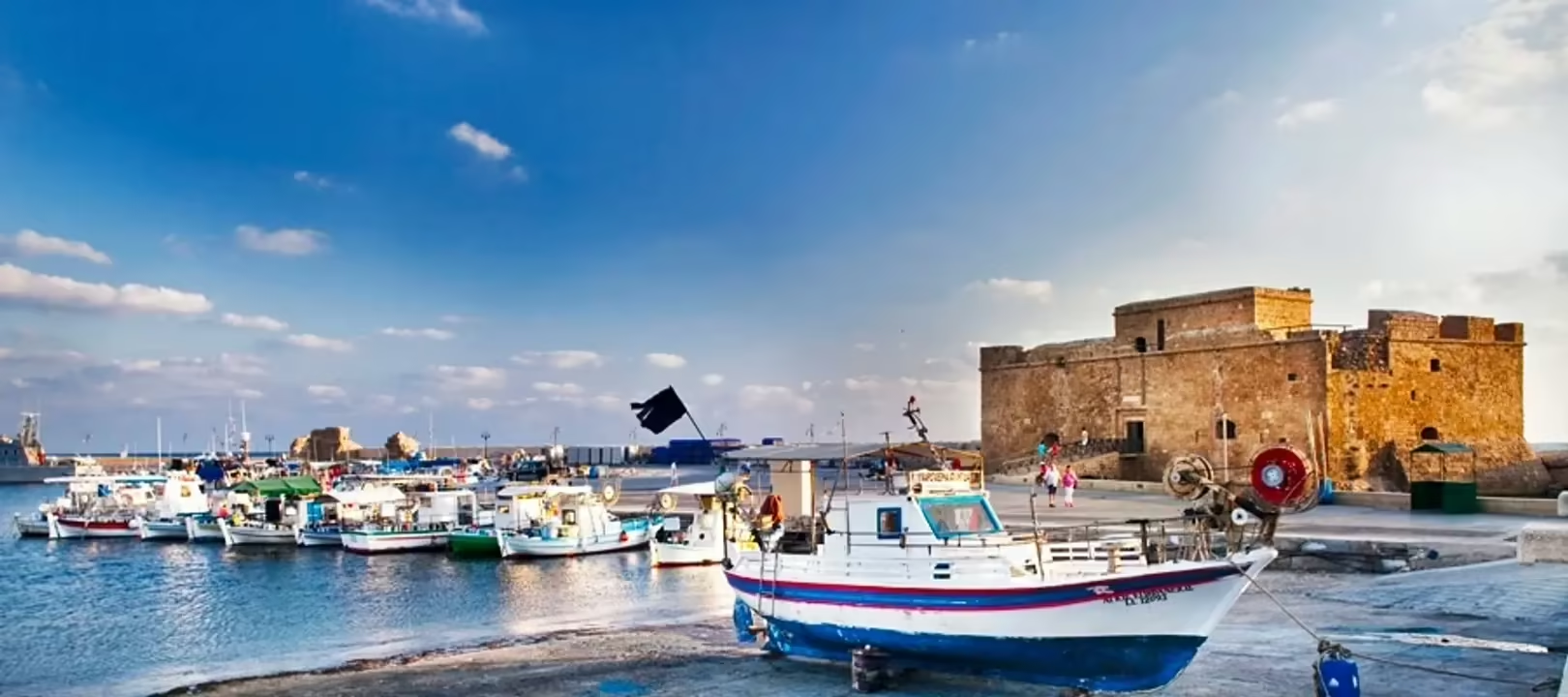
Kato Paphos Archaeological Park är stadens kronjuvel med de enastående välbevarade mosaicgolven från romartiden i husen tillägnade Dionysus, Theseus, Aion och Orpheus. Kungagravar, uthuggna i fast berg och daterade till 300-talet f.Kr., erbjuder en gripande glimt av det antika förflutna. Paphos hamn, dominerad av sitt medeltida fort, är den perfekta platsen för en kvällspromenad följt av middag på någon av de många restaurangerna vid vattnet.
Utöver de arkeologiska skatterna erbjuder Paphos vackra stränder, bland annat Coral Bay – en hästskoformad sandstrand med grunt, varmt vatten som är perfekt för familjer. Akamas-halvön, tillgänglig från Paphos, är ett orört naturreservat som lämpar sig utmärkt för vandring, mountainbike och upptäckter av avskilda stränder som den berömda Blue Lagoon. Utforska våra semesterbostäder i Paphos.
Destinationsguide
Aphrodite Hills är en av Cyperns främsta integrerade semesteranläggningar, belägen på ett storslaget platå med utsikt över Medelhavet och Afrodites legendariska födelseort. Belägen mellan Limassol och Paphos sträcker sig denna prisbelönta anläggning över mer än 200 hektar och erbjuder en självförsörjande lyxlivsstil som kombinerar sport, avkoppling och naturskönhet.
Anläggningen kretsar kring sin mästerskapsgolfbana med 18 hål, designad av Sir Henry Cotton och ansedd som en av de finaste i östra Medelhavet. Övriga faciliteter inkluderar en världsklassig tennisacademi, ett ridsportcentrum, ett lyxigt spa, flera swimming pools samt ett bytorg med restauranger, kaféer och butiker. För familjer finns dedinierade barnklubbar och aktiviteter.
Det som gör Aphrodite Hills verkligt speciellt är dess läge på en kulle, med svepande panoramautsikt över havet, citruslundar och det omgivande landskapet. Resortens privata strand nås via shuttle och linbana, medan det legendariska Petra tou Romiou (Afrodites klippa) är synlig från många utsiktspunkter inom området. Bläddra bland våra semesterbostäder i Aphrodite Hills för den perfekta aktiva lyx-semestern.
Insidertips
Ta ut det mesta av din Cypern-semester med dessa praktiska tips från vårt lokala team.
Praktisk information
Cypern använder euro (EUR) som officiell valuta. Kredit- och betalkort accepteras i stor utsträckning på hotell, restauranger, butiker och bensinstationer. Uttagsautomater finns lättillgängliga över hela ön. Det rekommenderas att ha lite kontanter för mindre etablissemang, bytaternor och marknadsköp.
Kontaktlösa betalningar blir allt vanligare, och de flesta etablissemang accepterar Visa, Mastercard och American Express. Valutaväxling finns tillgänglig på flygplatser, banker och dedikerade växlingskontor i turistområden.
Det officiella språket är grekiska, men engelska talas i stor utsträckning över hela ön, särskilt i turistområden, på hotell, restauranger och i butiker. De flesta skyltar, menyer och officiella dokument finns tillgängliga på både grekiska och engelska.
Att lära sig några grekiska fraser uppskattas alltid av lokalbefolkningen: "Kalimera" (god morgon), "Efharisto" (tack) och "Yia sou" (hej/hejdå) ger dig varma leenden. Ryska, tyska och franska talas också ofta inom besöksnäringen.
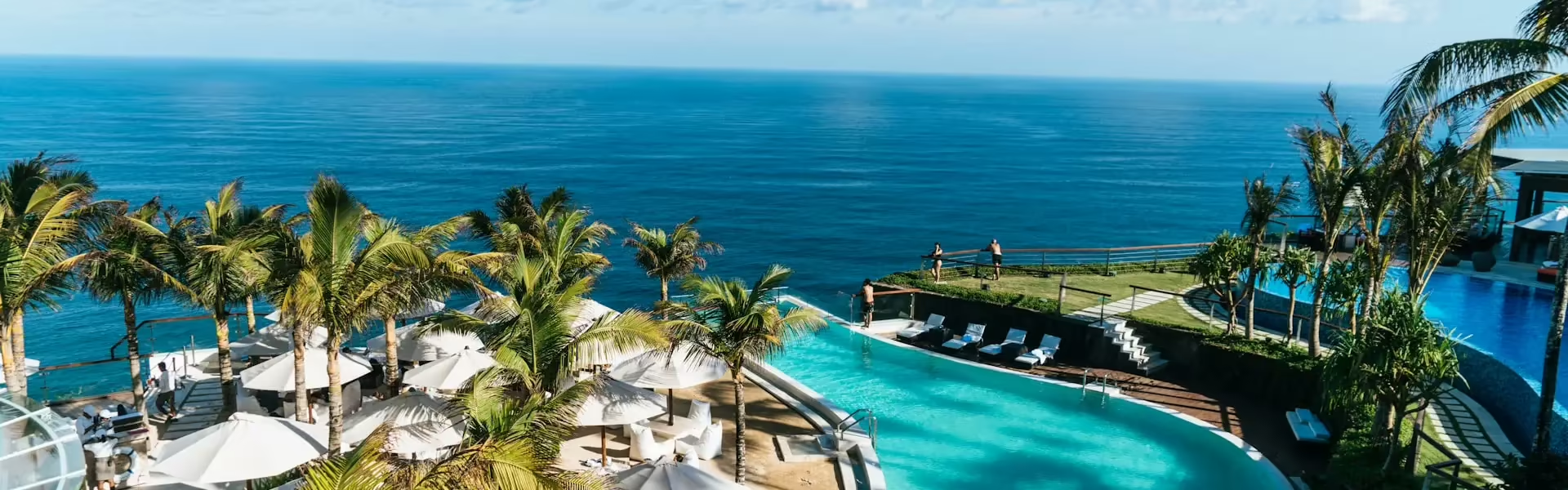
Bläddra bland vår exklusiva samling av lägenheter och villor i Limassol, Paphos och Aphrodite Hills. Din drömesemester är bara ett klick bort.