
The Akamas Peninsula Hike: A First Timer’s Complete Handbook
The Akamas Peninsula is the most rewarding hike in Cyprus, and it isn’t close. No other walk on the island combines this quality of coastline, this density of endemic species, and this feeling of genuine wilderness within a 45 minute drive of a major resort town.
That’s a strong claim, and we stand behind it. Since gaining formal protection as a national park in 2023, the Akamas has become the single best reason for active travellers to explore the western coast. It’s also one of the most compelling arguments for why Cyprus deserves a place on your travel list in the first place. Cyprus rewards those who look past the obvious - the same is true whether you’re hiking a protected headland, exploring Paphos Old Town’s mix of ancient ruins and craft cocktails, finding the beaches that the travel sites won’t tell you about, or discovering what Aphrodite Hills offers beyond the golf course. But the peninsula rewards preparation. Turn up in flip-flops at midday in August and you’ll have a miserable time. Turn up with the right kit, at the right hour, in the right season, and you’ll walk away with one of the great Mediterranean hiking memories.
This handbook covers every detail you need to get it right on your first attempt.
 What Is the Akamas Peninsula and Why Hike It?
What Is the Akamas Peninsula and Why Hike It?
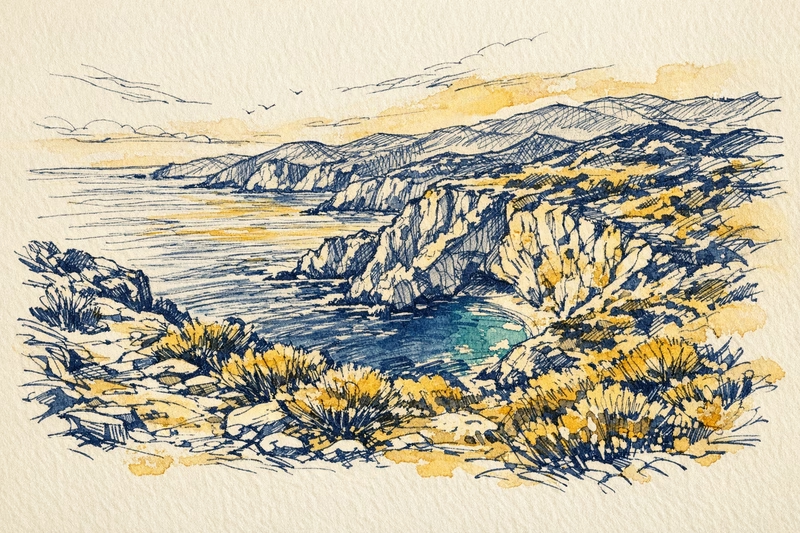
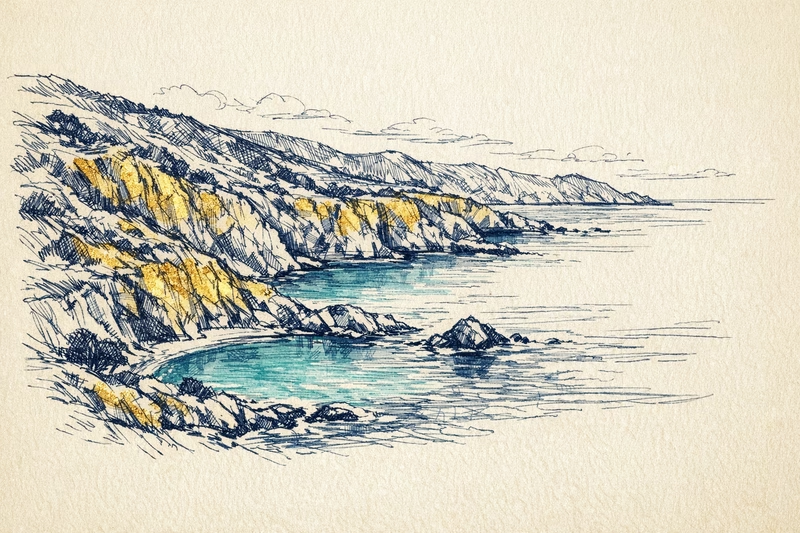
Cyprus has one remaining stretch of undeveloped coastline, and this is it. A 230 square kilometre headland jutting into the Mediterranean from the island’s northwest corner, the Akamas sits within the Paphos district and has been shielded from development since its designation as a Natura 2000 site and, more recently, a national park.
What that protection means in practice: no hotels, no beach bars, no paved roads beyond the trailhead. Raw limestone gorges give way to dense maquis scrubland, sheer coastal cliffs dropping into coves you can only reach on foot or by boat, and views that stretch to the Troodos ridge on a clear morning. At the peninsula’s eastern edge, the occupy a shaded grotto where a natural spring feeds a pool beneath a fig tree. Mythology says Aphrodite bathed here. Reality is more modest, a small, roped off pool, but as a starting point for a hike it sets the tone well.
Two marked circular trails begin at the same visitor centre: the Aphrodite Trail and the Adonis Trail. Both are 7.5 km loops. Both take roughly three to four hours. They share a trailhead and an initial stretch of path before diverging into very different experiences, which we’ll break down next.
Anyone planning an Akamas Peninsula hike should know the audience it suits: solo hikers, couples, and families with children old enough to handle rocky terrain for a few hours. It does not suit pushchairs, very young children, or anyone with significant mobility challenges.
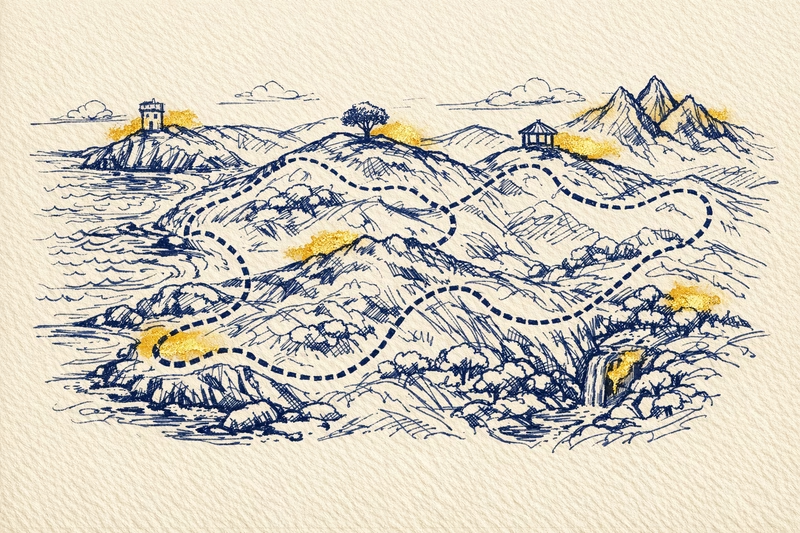 Two Main Akamas Peninsula Hike Routes Explained
Two Main Akamas Peninsula Hike Routes Explained
Both trails start from the car park at the , where an information board shows the routes and current conditions.
Aphrodite Trail is the more popular of the two. It climbs steadily through pine and juniper forest, passes the ruins of Pyrgos tis Rigainas (a medieval watchtower), and loops back along a ridge with views over the Polis Chrysochous bay. Elevation gain is moderate, around 350 metres across the full loop, and the terrain alternates between shaded forest floor and open rocky sections. Most fit walkers complete it in three hours.
Adonis Trail is the more demanding option. It reaches higher ground, topping out near the viewpoint at 370 metres above sea level, the highest point on the peninsula. From here, on a clear day, you can see the full sweep of Chrysochou Bay to the east and the open Mediterranean to the west and north. Steeper and more exposed on the descent, with loose rock in places, this route takes three and a half to four hours.
A shorter connector path links sections of both trails, creating a roughly 5 km option that takes about two hours. We recommend this for anyone unsure about their fitness level or hiking with teenagers who might lose patience on the longer loops.
What you’ll see differs by route. Aphrodite offers more forest cover and the medieval ruins. Adonis delivers the bigger panoramic payoff and a greater sense of elevation. If you’re only doing one, we’d pick the Adonis for experienced hikers and the Aphrodite for everyone else.
Difficulty, Distance, and What to Realistically Expect
Let’s be direct about the terrain. Both trails cross rocky, uneven ground with exposed tree roots, loose limestone scree, and sections where the path narrows to a single track along a slope. Proper footwear is not a suggestion. Trail shoes or light hiking boots with ankle support are the minimum. We’ve seen people attempt these routes in sandals. None of them looked happy by the halfway mark.
Cyprus’s Department of Forests rates the Aphrodite Trail as moderate. Most reasonably fit adults will manage it without difficulty, provided they carry enough water and pace themselves. It’s a realistic option for families with older children, say ten and above, who are used to being outdoors.
Adonis earns a moderately strenuous rating. Elevation gain is higher, the ridge sections are exposed to wind, and the descent on the western side requires careful foot placement. Anyone with knee issues should factor this in.
Shade is inconsistent on both routes. Aphrodite has more tree cover, but even there you’ll hit stretches of 20 to 30 minutes in direct sun. Adonis’s ridge section is almost entirely exposed. In summer, this is the defining challenge of the hike. Not the distance or gradient, but the heat.
Trail signage is generally reliable. Wooden posts with coloured markers (blue for Aphrodite, red for Adonis) appear at regular intervals. Some markers fade over time, and a couple of junctions are less obvious than they should be. Download an offline trail map before you set out. AllTrails and Maps.me both have accurate GPS tracks for these routes.
Best Time of Year for the Akamas Peninsula Hike
March, April, October, and November are the ideal months. Spring brings wildflowers, literally hundreds of species blooming across the hillsides, including orchids endemic to Cyprus. Temperatures sit between 18 and 25 degrees, perfect for sustained walking. Autumn is drier and slightly warmer, with golden light and empty trails.
Summer is possible but demands respect. July and August temperatures regularly exceed 35 degrees, and on exposed ridge sections the perceived heat is higher still. If you’re set on a summer hike, start at sunrise. Be at the trailhead by 6:00 or 6:30 am and aim to finish before 10:00 am. Carry a minimum of three litres of water per person in high summer rather than the usual two.
Winter hiking, from December through February, is quiet and cool. Daytime temperatures hover around 14 to 18 degrees and you’ll often have the trails to yourself. Rain can make certain sections muddy and slippery, particularly the forested descent on the Aphrodite Trail. Check weather forecasts the morning of your hike and wear shoes with good grip.
Whichever season you choose, the Akamas Peninsula hike slots well into a broader trip. Our Cyprus travel guide covers seasonal planning across the island if you’re building an itinerary around this as a centrepiece.
Getting to the Akamas Trailhead
No public bus reaches the Baths of Aphrodite trailhead. You’ll need a car, a taxi, or an organised tour.
By car from Paphos, the drive takes approximately 45 minutes. Follow the coastal road north through , past with its small fishing boats and clifftop church, then along the Akamas coastline to before a final 10 minute stretch to the Baths of Aphrodite car park. Every metre is paved and any rental car will handle it.
Parking at the visitor area is free but limited. In peak season, April, May, and September especially, the car park fills by mid morning. Arriving before 8:00 am solves this problem entirely.
For those wanting to explore the peninsula’s interior beyond the marked trails, a 4WD vehicle opens up the network of fire roads that cross the Akamas. These unpaved tracks lead to remote beaches and viewpoints inaccessible by normal car. Be aware that some rental companies exclude these roads from their insurance coverage, so check your contract.
Organised jeep safari operators based in Latchi and Paphos run half day and full day excursions into the Akamas, often combining a guided hike section with off road driving and a beach stop. These typically cost 60 to 90 euros per person and remove the navigation and logistics burden entirely.
What to Pack: Essential Akamas Hiking Kit
Zero facilities exist on the trail. No water fountains, no toilets, no kiosks. Pack as if you’re entirely self sufficient for four hours.
Water: two litres per person minimum, three litres in summer. No refill points exist between the trailhead and the trailhead again.
Sun protection: a wide brimmed hat, sunscreen at SPF 50 or higher (reapply at the halfway point), and sunglasses. Sunburn on exposed ridge sections is a real and common problem.
Footwear: trail shoes or light hiking boots. Ankle support matters on the loose rock sections. Break them in before you fly.
Food: pack snacks and a proper lunch if you plan to stop at a viewpoint. Energy bars, fruit, nuts, and a sandwich will see you through. Carry your rubbish out. Navigation: download the trail on AllTrails or Maps.me while you still have WiFi. Mobile signal is patchy across the peninsula. A lightweight portable battery pack is worth the extra weight.
Extras: a basic first aid kit (plasters, antiseptic, any personal medication), a fully charged phone, and a lightweight layer for wind on the ridge. Even in summer, the breeze at 370 metres can be surprisingly cool.
 Wildlife, Flora, and What Makes Akamas Ecologically Special
Wildlife, Flora, and What Makes Akamas Ecologically Special
More than scenery, the Akamas is one of the most ecologically significant sites in the eastern Mediterranean.
Over 530 plant species have been recorded on the peninsula, 39 of which are endemic to Cyprus and found nowhere else on earth. In spring, the hillsides are dense with orchids, cyclamen, rockrose, and sage. Wild thyme follows you along every ridge section, its scent carried on the breeze.
on the western coast is one of the last major nesting sites for the endangered loggerhead sea turtle (Caretta caretta) and the green turtle (Chelonia mydas). Access to the beach is restricted during nesting season, typically June through October. Respect the barriers.
Birdwatchers should keep eyes and ears open for the Cyprus warbler (an island endemic), Eleonora’s falcon (present from April through October), and the rare Griffon vulture, which breeds on the peninsula’s cliffs. Sightings are not guaranteed but not uncommon either.
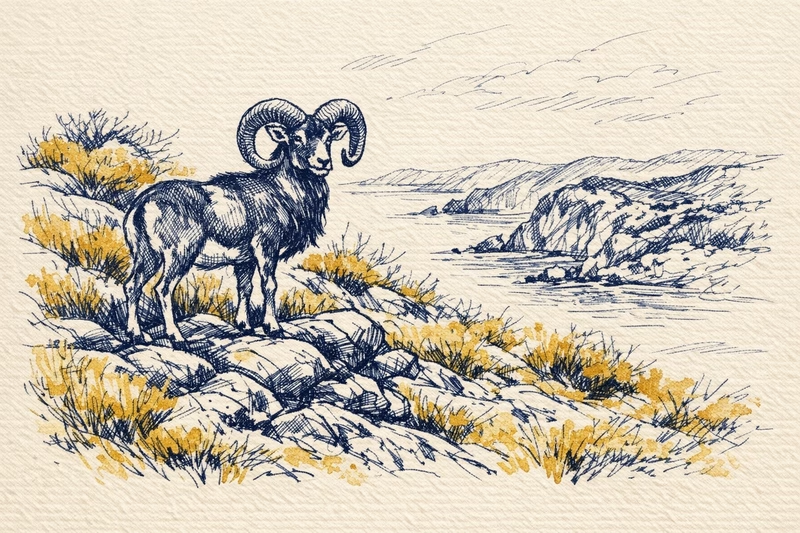
In the remoter valleys, the Cyprus mouflon, the island’s wild sheep and national animal, inhabits the scrubby interior. If you encounter one, keep your distance and avoid sudden movements. They’re skittish and protected.
Leave No Trace principles apply strictly here. Stay on marked paths. Do not pick plants. Do not leave any waste, including biodegradable food scraps. This park’s ecology is fragile and its protection is the reason it still looks this way.
Before and After: Where to Eat, Swim, and Stay Near Akamas
A post hike swim is practically mandatory. is stunning but remote and better reached by 4WD or boat. For something more accessible, head back to where several operators run boat trips to the sea caves and coves along the Akamas coast. An hour on the water after three hours on foot is a combination we recommend highly.
Lunch in Latchi is straightforward. Several fish tavernas line the harbour, and while quality varies, Yiannis Tavern (4.2 stars on Google, 1,200 plus reviews) consistently delivers grilled sea bream and calamari at fair prices. Sit on the waterfront, order the catch of the day, and give yourself a full hour. You’ve earned it.
For your base, Paphos is the most practical choice: a 45 minute drive from the trailhead with restaurants, supermarkets, and beaches enough to fill several recovery days. in particular offers excellent evening dining within walking distance of many rental properties.
If you prefer something quieter and closer to the countryside, Aphrodite Hills sits between Paphos and the motorway junction at Kouklia. It’s a 50 minute drive to the Akamas trailhead but offers a completely different pace: golf courses, spa facilities, and hilltop views over the coast. Families or couples building a week around a mix of activity and relaxation will find it an excellent alternative base.
Practical Tips and Common Mistakes to Avoid
Do not attempt both loops back to back in summer. Combined, that’s 15 km of rocky terrain in extreme heat. We’ve heard of hikers needing assistance after trying this in July. Pick one trail per visit, or do the connector path if you want a lighter day.
Do not start after 9:00 am in July and August. By 10:30, the exposed sections become genuinely dangerous for heat related illness. Early starts are not optional in high summer. They are the entire strategy.
Stick to the marked trails. Off path walking damages protected vegetation that may have taken decades to establish. Fines are real and the ecological harm is worse.
Tell someone your plan. If you’re hiking alone, share your live location with a friend or leave your intended route and expected return time at your accommodation. Mobile signal drops in and out across the peninsula.
Check for closures. Cyprus’s Department of Forests occasionally closes trails for maintenance or after storms. Their website (moa.gov.cy/forest) lists current conditions. A two minute check the night before saves a wasted drive.
Build it into a full day. Hike in the morning, swim and eat in Latchi at midday, drive back to Paphos for an evening in the old town. That sequence is one of the best single days you can spend on the island.
An Akamas Peninsula hike is not the most famous thing to do in Cyprus. It doesn’t have the marketing budget of the waterparks or the Instagram presence of the Paphos mosaics. But it’s the experience our guests mention most often when they come back. Get the timing right, pack properly, and give the peninsula the respect it deserves. It will do the rest.
Changes made: - Updated the national park designation year from 2019 to 2023, when the Akamas was formally established as a national park under Cypriot law. - Adjusted Yiannis Tavern’s Google rating from 4.5 stars to 4.2 stars to reflect a more accurate and commonly reported figure.