Paphos Old Town Guide: Everything You Need for Your First Visit
You’re standing in your rental car at Paphos airport, Google Maps open, wondering whether “old town” means the harbour with the castle or the hilltop with the square. Fair question. Most first-timers get confused because Paphos old town is actually two distinct areas, and nobody explains that clearly enough before you arrive. (If you haven’t sorted the car yet, it’s worth reading about the mistakes that cost first-timers money when renting in Cyprus before you book.)
Consider this Paphos old town guide everything we wish someone had handed us on our first visit. No fluff, no filler, just the practical details and honest opinions that will save you time, money, and the frustration of eating at the wrong restaurant. If you’re still weighing up Cyprus as a destination, our breakdown of what the Cyprus travel warnings actually mean in 2025 is worth a read before you commit.
If you’re still in the early stages of planning your trip to Cyprus, it’s also worth sorting out where you’ll stay - if you’re considering a villa, our guide to Cyprus villas with a pool breaks down the private vs shared question clearly. Bookmark this page and come back when Paphos is locked in. You’ll want these details fresh.
 What Is Paphos Old Town and Why Should First-Timers Care?
What Is Paphos Old Town and Why Should First-Timers Care?
Paphos old town splits into two parts, and understanding this before you arrive changes everything.
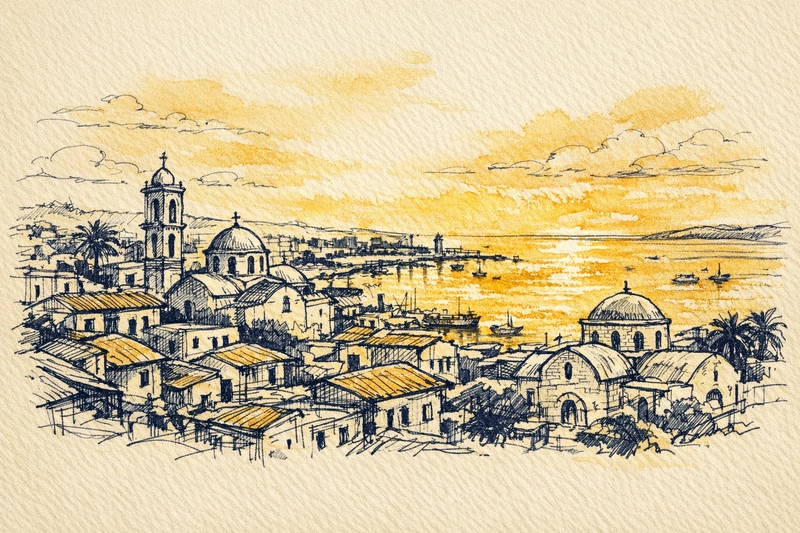
Ktima is the upper old town, sitting on a limestone plateau about 3km inland from the coast. This is where Paphiots actually live, shop, and drink their morning coffee. Quiet backstreets, neighbourhood churches, a proper municipal market, and squares shaded by mature jacaranda trees. It feels like a real Cypriot town because it is one.
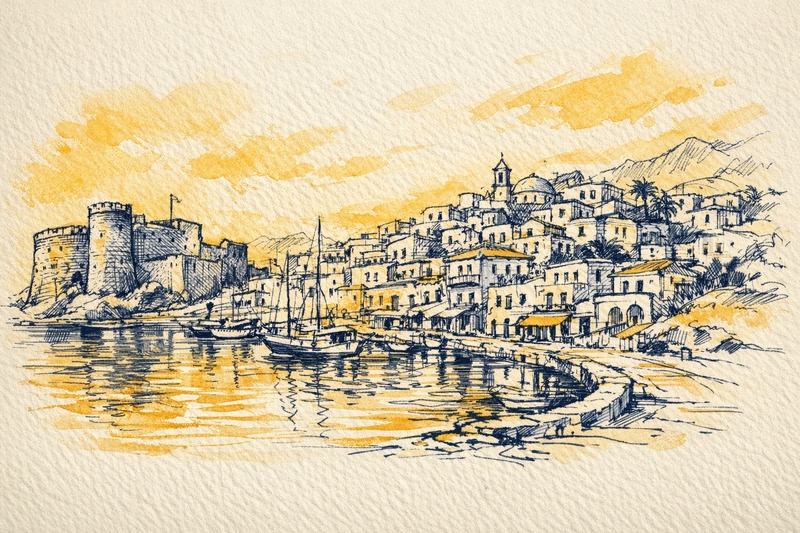
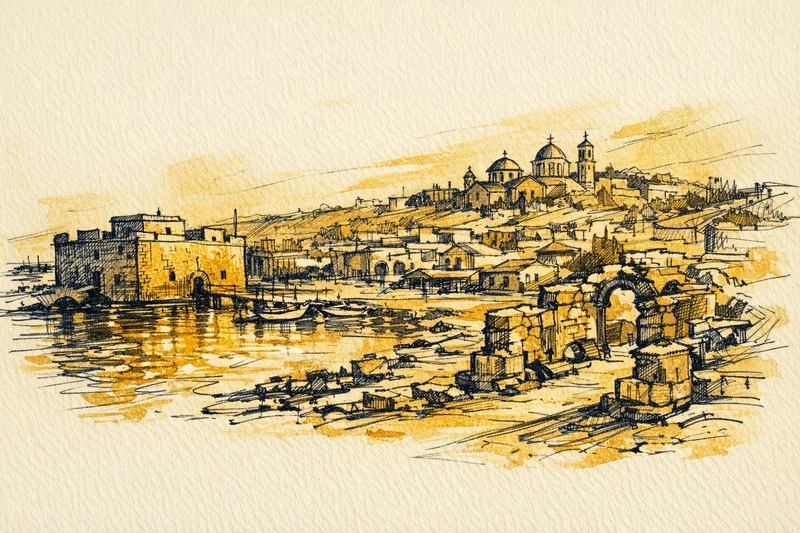
Kato Paphos is the lower harbour area, closer to sea level. Here’s where the big archaeological sites cluster, including the with its extraordinary Roman mosaics and the small medieval castle at the harbour’s edge. More tourist-facing, more developed, more crowded. But the historical weight of the place is undeniable. UNESCO granted the entire area World Heritage status in 1980, and those mosaics are considered among the finest in the eastern Mediterranean for good reason.
How much time should you budget? A half day gets you the main archaeological sites in Kato Paphos and a quick lunch. A full day lets you explore Ktima properly, eat without rushing, and actually sit in a square long enough to feel the pace of the place. We’d always push for the full day.
One thing we tell every friend planning their first trip: few places in the Mediterranean let you walk from a 3rd century Roman villa to a medieval harbour castle in fifteen minutes. And if you’re wondering why Cyprus over other destinations, Paphos alone makes a strong case.
Getting There and Getting Around
Paphos International Airport sits about 13km southeast of the old town. A taxi to Kato Paphos harbour takes roughly 20 minutes and costs between 25 and 35 euros depending on the time of day. Agree the fare before you get in, or insist on the meter. Airport buses (route 612) run to Karavella station near the harbour, but the schedule is thin outside of summer.
If you’ve rented a car, parking in Kato Paphos is straightforward. A large free car park sits directly beside the archaeological park, and it rarely fills completely outside of July and August. In Ktima, aim for the streets around where you’ll find metered spots and a couple of small municipal lots.
Weekday mornings are easiest.
Once you’re in either area, put the keys away. Kato Paphos is entirely walkable, with the castle, mosaics, and harbour restaurants all within a 15 minute radius. Ktima is compact and mostly flat despite being elevated. Getting between the two is the only challenge: they’re connected by Apostolou Pavlou Avenue, which is a 25 minute walk or a 5 euro taxi ride. Local buses connect them (routes 603 and 610), but honestly, the taxi is faster and less confusing for a first visit.
What to See (and What You Can Skip)
You don’t need to see everything. Here’s what actually deserves your time, in the order that makes geographic sense if you’re starting at the harbour.
Paphos Castle is where we’d send you first. Walk to the western edge of the harbour and you can’t miss this squat medieval fort, rebuilt by the Ottomans in the 16th century. It’s small inside, just a few vaulted rooms and a rooftop terrace. But that rooftop gives you the best view of the harbour and coast. Entry is 2.50 euros, daily from 8:30am to 5pm in winter, extended to 7:30pm in summer. Photograph it from the harbour breakwater in late afternoon when the light hits the stone walls warmly.
Paphos Mosaics are the headline attraction, and they genuinely live up to it. Inside the archaeological park, the alone contains some of the most intricate Roman floor mosaics you’ll encounter anywhere. You’ll find yourself crouching over the Triumph of Dionysus panel, amazed at the colour preservation after nearly two millennia. Allow 60 to 90 minutes for the full park, which also includes the House of Theseus and the House of Aion. Combined entry is 4.50 euros. Wear comfortable shoes and bring water, because shade is limited and you’ll cover a lot of ground.
Families with younger children should know that kids find the mosaics genuinely interesting, especially if you turn it into a “spot the animal” game.
Agia Kyriaki Chrysopolitissa and St Paul’s Pillar sit just north of the archaeological park. An active 13th century church built over a larger early Christian basilica, with a courtyard pillar where, according to tradition, St Paul was tied and flogged before the Roman governor converted. Free entry, five minutes is enough unless Byzantine stonework is your thing.
Tombs of the Kings lies about 2km north along the coast, and here’s the thing nobody mentions: no kings were actually buried here. You’ll find carved underground tombs from the 3rd century BC, used by wealthy Paphiots, with some chambers featuring Doric columns and courtyards open to the sky. Entry is 2.50 euros. Go early morning or late afternoon because the site is large and completely exposed. Flat shoes are essential as the rock surfaces are uneven and slippery in places.
Strolling the Backstreets: Where Ktima Gets Good
Kato Paphos gets the tourist traffic. Ktima gets the character.
Start at , the social centre of upper Paphos. It’s a wide, tree-lined plaza where retired men play backgammon in the shade and young families let their kids run between the benches. On weekday mornings, it feels like a village square despite being in a town of 35,000.
Grab a coffee from one of the cafes on the eastern side, sit facing the square, and just watch for twenty minutes. You’ll understand Ktima better from that bench than from any guidebook.
From there, walk south towards the , a covered hall where vendors sell halloumi, olives, dried herbs, and seasonal fruit. We need to be honest: it’s not a polished food market designed for Instagram. Some stalls are closed, the lighting is unflattering, and nobody is performing for tourists. That’s exactly why it’s worth your time. Buy a bag of Cypriot almonds or some local honey and you’ll spend less than 5 euros.
Backstreets between Kennedy Square and the market are the real reward. Narrow lanes, stone walls draped in bougainvillea, painted wooden doors in faded blues and greens, occasional tiny churches that seem too small to be real. You don’t need a route. Wander south and east from the square, and you’ll find your own corners.
Our best advice for Ktima: leave the itinerary loose. Sit when you find somewhere beautiful. Walk when you get curious. This part of town works best without a schedule.
 Where to Eat and Drink (Honestly)
Where to Eat and Drink (Honestly)
Here’s the thing we wish someone had told us before our first Paphos trip: most of the restaurants lining the Kato Paphos waterfront are mediocre and overpriced. Views are lovely. Menus are identical. Seafood is often frozen. If you want atmosphere with your meal, fine, pick one and enjoy the setting. But lower your expectations for the food itself.
For better eating, do what the locals do. Head up to Ktima or duck into the side streets behind the harbour strip.
In Ktima, the cafes around Kennedy Square serve proper Cypriot coffee, brewed in a briki and served with a glass of cold water. Don’t rush it. A Cypriot coffee is a 30 minute experience, not a 5 minute caffeine hit. Order it “metrio” (medium sweet) if you’re unsure.
For a proper meze lunch, look for tavernas on the quieter streets around the 7 St. Georges area in upper Paphos. A full meze spread means 15 to 20 small dishes served over an hour or more, typically costing 18 to 25 euros per person. That’s more food than any reasonable person needs. Go hungry. Pace yourself. And whatever you do, don’t fill up on the bread and dips in the first ten minutes. The grilled halloumi and slow-cooked lamb are still coming.
Quick breakfast tip: any bakery in Ktima will sell you a flaouna (cheese-filled pastry) or a spanakopita for under 3 euros. Pair it with a fresh orange juice and you’ve got a breakfast that beats any hotel buffet.
Practical Tips You’ll Be Glad You Read
Best time of day: Get to the archaeological park when it opens at 8:30am. We cannot stress this enough. By 11am in summer, the heat on those exposed mosaics is brutal and you’ll be wishing you’d come earlier. Ktima is best mid-morning or late afternoon, when the squares are lively and the light is soft.
What to wear: Comfortable, flat shoes are not optional. Ktima’s backstreets are cobblestoned, the archaeological park is uneven ground, and the Tombs of the Kings involves steps carved into rock. Visiting any active churches? Cover your shoulders and knees. A light scarf in your bag solves this.
Tickets and money: A combined ticket for the and Tombs of the Kings is available and saves a couple of euros. Buy it at the first site you visit. Card payments are accepted at most restaurants and shops in the tourist areas, but carry some cash for the market, small bakeries, and parking meters.
Accessibility: Be honest with yourself about mobility. Ktima’s backstreets are steep in places. Parts of the archaeological park have gravel paths and limited wheelchair access at some mosaic houses. Tombs of the Kings involves significant stair climbing. If mobility is a concern, the harbour-front area of Kato Paphos is the flattest and most accessible section.
Safety: Paphos is exceptionally safe. No scams worth worrying about beyond the universal “check the restaurant bill carefully” advice that applies everywhere in southern Europe.
Where to Stay Near Paphos Old Town
Staying within walking distance of the old town makes a real difference. You can catch early morning light at the archaeological park, wander back for a late lunch, and stroll the harbour at sunset without ever needing a car or taxi.
Kato Paphos has the highest concentration of accommodation near the harbour and tourist strip. It’s convenient but can feel busy in peak season. Ktima has fewer options but far more local character, and you’re a short ride from everything.
For a quality base with more space and privacy than a hotel room, our Paphos vacation rentals put you within easy reach of the old town while giving you a kitchen, a terrace, and the freedom to set your own schedule. For families or groups especially, the difference between a holiday rental and a hotel room becomes obvious by day three.
If you’d prefer a resort setting with pools and restaurants on site, Aphrodite Hills is about 20 minutes east. It works well if you’re happy to drive into town for your old town explorations and want the resort experience the rest of the time.
Day Trips Within Easy Reach
A good Paphos old town guide should also point you to what’s close by, because the wider region keeps you busy for a week.
sits 20 minutes east along the coastal road, and you’ll recognise it immediately from every Cyprus postcard. Park in the car park above the road and take the underpass down to the beach. Swimming here is possible but the currents are strong, so treat it as a photo stop rather than a swimming destination. Late afternoon light makes the rocks glow.
Northwest of Paphos, the is a protected wilderness of gorges, coastal trails, and secluded bays. We’d point you to the Avakas Gorge hike first: manageable for most fitness levels, about 90 minutes return. Lara Beach, on the peninsula’s western coast, is a nesting site for loggerhead and green turtles and one of the most beautiful undeveloped beaches on the island. You’ll need a rental car or an organised jeep tour for Akamas, as public transport doesn’t reach most of it.
For a completely different pace, Limassol is 45 minutes east on the motorway. It’s Cyprus’s most cosmopolitan city, with a renovated marina, a long seafront promenade, and a food scene that’s evolved rapidly in the last five years. Worth experiencing if you have the time.
A rental car unlocks all of this comfortably. Without one, you’ll rely on taxis and tours, which work but cost more and restrict your flexibility. If you’re staying for more than three days, rent the car.
Paphos old town isn’t the kind of place that announces itself loudly. Ktima especially works on you slowly, through the quality of the light on old stone, the unhurried pace in the squares, and the feeling that you’ve found somewhere real. Give it a full day. Walk the backstreets. Eat away from the obvious spots. You’ll leave understanding why people come back.