Cyprus Easter Traditions: A Day by Day Guide to Holy Week
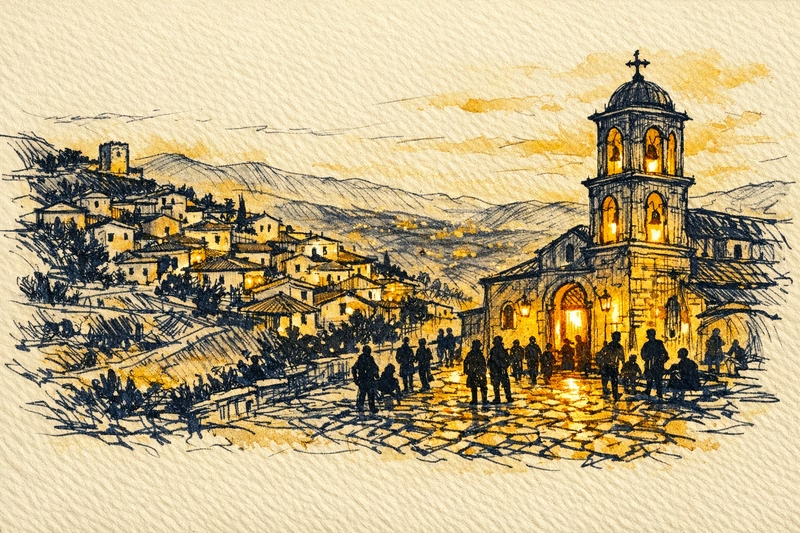
The church bells start before you see the village. You hear them rolling down through the Troodos foothills, bouncing off limestone walls and terracotta roofs, reaching you somewhere on the winding road between Koilani and Lefkara. It’s 11pm on Holy Saturday, and every soul in this hilltop square is holding a white candle. The priest’s voice rises from the open church doors. Then the fireworks crack the sky apart, and a thousand flames pass from wick to wick, and strangers are kissing your cheeks and saying two words you’ll hear a hundred times before dawn: Christos Anesti. Christ is risen.
This is Cyprus Easter. And nothing else on the Mediterranean calendar comes close.
 Why Cyprus Easter Is Unlike Any Other in the Mediterranean
Why Cyprus Easter Is Unlike Any Other in the Mediterranean
Greek Orthodox Easter is the single biggest event on the Cypriot calendar. Bigger than Christmas. Bigger than any national holiday. The entire island shifts gear for it, from the fasting weeks of Lent through to the Sunday feast that fills every garden, balcony, and village square with the smoke of lamb turning slowly on iron spits.
One thing catches visitors off guard every year: the dates. Orthodox Easter follows the Julian calendar, which means it rarely falls on the same weekend as Western Easter. In some years the gap is a week. In others, it’s five weeks. Always check the specific dates before booking. In 2025, Orthodox Easter Sunday falls on 20 April, which happens to align with Western Easter. That won’t happen again for several years. If your dates don’t line up with Holy Week, the Cyprus Festivals Calendar: A Local’s Month by Month Guide for Visitors is worth consulting to find what else is happening on the island during your visit - it’s worth knowing that Cyprus in October offers its own compelling reasons to visit outside peak season, and the winter sun case for Cyprus is another option that surprises most visitors with how much the island has to offer when the crowds have gone.
What makes Cyprus Easter traditions extraordinary isn’t just the religious depth. It’s the fact that the celebration takes over every sense. Church bells compete with fireworks. Candlelight floods cobblestone streets. The scent of rosemary, charcoal, and roasting lamb hangs in the warm spring air from Saturday night through Sunday evening. If you’ve been wondering why Cyprus draws so many repeat visitors, experiencing Holy Week here answers the question in a single weekend.
 The Holy Week Calendar: Day by Day Cyprus Easter Traditions
The Holy Week Calendar: Day by Day Cyprus Easter Traditions
The intensity concentrates in the final seven days. Every single one of them delivers something you won’t forget.
Clean Monday (Kathara Deftera): Falling 48 days before Easter, this marks the start of Great Lent. But don’t picture solemnity. Cypriots head outdoors for kite flying, picnics, and fasting foods. Look for taramosalata, olives, lagana flatbread, and halvas in every bakery. Pure celebration.
Holy Monday to Wednesday: Churches begin preparing the Epitaphios, the flower-covered funeral bier carried through the streets on Good Friday. In village kitchens across the island, families start making flaounes, the savoury cheese pastries baked only at Easter. In Lefkara (the village famous for its lace and silverwork, 4.5 stars on Google, over 4,800 reviews), you can watch women shaping dough on courtyard tables exactly the way their grandmothers did.
Holy Thursday: Families boil dozens of eggs and dye them deep crimson using traditional red dye. The colour symbolises the blood of Christ and the promise of resurrection. In many villages, visitors are welcomed to watch and even help. Church services in the evening are long, emotional, and packed.
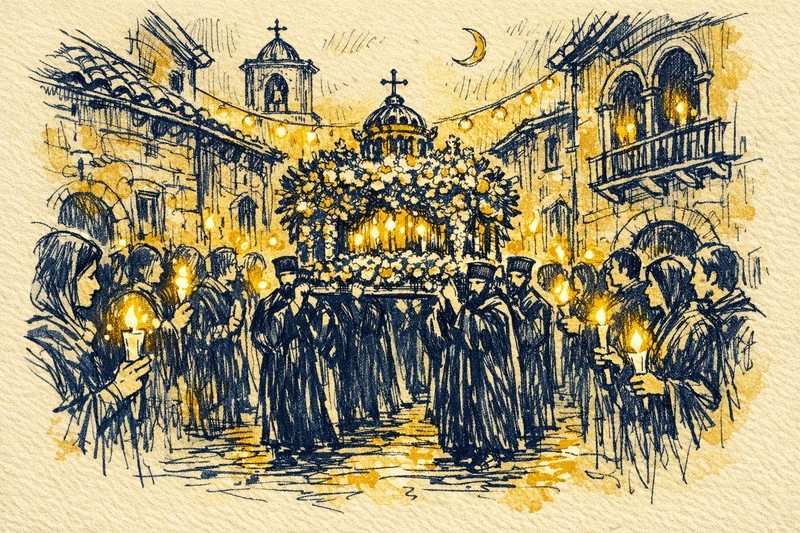
Good Friday (Megali Paraskevi): The most solemn day of the year. Flags fly at half-mast. Music goes silent on the radio. After dark, the Epitaphios procession begins. Flower-draped biers are carried through streets lit only by candles held by hundreds of mourners walking in slow, silent procession. We’ve seen it over a dozen times and it still stops us cold.
Holy Saturday: This is the day that builds like nothing else.
Families prepare the souvla spits. Children pick out their new shoes. Just before midnight, everyone gathers at their local church for the Anastasi service. At midnight, the priest announces the Resurrection. Fireworks explode. Candles light up the darkness in a wave. People greet each other with “Christos Anesti” and receive the reply “Alithos Anesti” (truly He is risen).
Easter Sunday: The feast. Whole lambs and kokoretsi turn on spits from early morning. Red eggs are cracked against each other in a game called tsougrisma. Families gather, tables overflow, and strangers are fed. Generosity on this day isn’t a tradition. It’s a reflex.
Where to Experience the Best Processions and Services
Not every location delivers the same experience. Here’s where we’d send you.
Paphos Old Town: The Good Friday procession through Kato Paphos winds past medieval ruins and Byzantine churches, the archaeological park sitting just minutes away. It feels almost cinematic. And the Saturday night energy here is fierce, joyful, and completely infectious.
Limassol Old Town: Bigger, louder, unforgettable. The processions draw thousands, and no village can replicate that sheer communal electricity. After midnight on Saturday, the coastal promenade becomes an impromptu celebration, families walking home with lit candles as the marina lights reflect off the water behind them.
Omodos Village: Our top pick for immersion. Timios Stavros Monastery (4.7 stars, over 3,500 reviews) sits at the village’s heart, and the Easter services here feel deeply personal. Saturday night fills the square with candles, and the procession route is so intimate that you’re not watching it. You’re in it. Arrive early. Parking fills fast.
Troodos Mountain Monasteries: Kykkos Monastery (4.7 stars, over 8,900 reviews) is the most famous, drawing pilgrims from across the island for the midnight service. The chanting echoes off mosaic walls in a way that stays with you for years. For something stripped of spectacle and full of quiet devotion, smaller monasteries like Trooditissa offer candlelit stone chapels and congregations of a few dozen.
Practical notes: Arrive at least 45 minutes early for the Saturday midnight service. Wear clothes that cover shoulders and knees. Bring your own candle (a lambada, sold at churches and kiosks beforehand). Stand where you can see the priest emerge with the Holy Light. That moment is the one you’ll remember.
 Traditional Cyprus Easter Foods You Need to Try
Traditional Cyprus Easter Foods You Need to Try
Some of these foods appear only once a year. Don’t miss them.
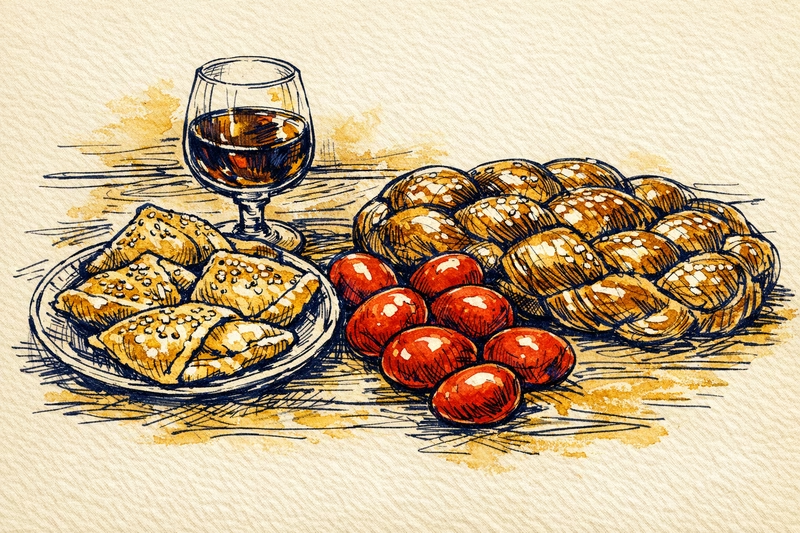
Flaounes are the icon of Cypriot Easter. Savoury pastries filled with halloumi, eggs, mint, and sometimes raisins, sealed in a distinctive folded shape and brushed with sesame seeds. Every family has a recipe. Each one insists theirs is the best. Bakeries in Omodos sell them warm from the oven all through Holy Week, and the Paphos Municipal Market (4.3 stars, over 1,200 reviews) is consistently excellent.
Tsoureki is a sweet braided bread with a red egg pressed into the top, often given as a gift between families. You’ll find it in every bakery from Palm Sunday onward.
Souvla and spit-roasted lamb define Easter Sunday. Entire neighbourhoods smell of charcoal and rosemary from 7am. If you’re staying in a villa, your neighbours will almost certainly invite you to try theirs. Say yes. Every time.
Magiritsa is the one that surprises visitors. A soup made from lamb offal, lettuce, dill, and egg lemon sauce, served immediately after the midnight Anastasi service to break the Lenten fast. Rich, complex, and absolutely worth trying even if the ingredient list gives you pause.
Trust us on this one.
Kokkina avga are the red eggs on every table. The tsougrisma game is simple: tap your egg against someone else’s, and whoever’s egg survives uncracked wins. Children take this extremely seriously.
Practical Tips for Visiting Cyprus During Holy Week
Book early. Holy Week is one of the busiest periods for accommodation across the island. Villas and apartments in Paphos and Limassol fill up weeks in advance. If you’re planning to host your own Easter Sunday lamb feast, a luxury villa with an outdoor kitchen and garden space transforms the whole experience.
Expect closures. Most shops, banks, and many restaurants close on Good Friday and Easter Sunday. Supermarkets close early on Saturday. Stock up on groceries by Thursday. Our Cyprus travel guide covers shopping hours and getting around in more detail.
Hire a car. Public transport is reduced during the holiday period, and the best processions happen in villages that buses don’t reach.
Bring children. This isn’t one of those cultural events where kids feel out of place. Children are carried to midnight services, toddlers crack red eggs at Sunday lunch, and nobody blinks if a baby cries during the liturgy. Cyprus Easter traditions are built around family, which makes Holy Week one of the most genuinely family-friendly experiences on the island.
Photography: Ask before shooting inside churches. Flash is discouraged during services. Good Friday processions are not the time for selfies. Read the room.
Where to base yourself: Paphos puts you closest to the ancient atmosphere and within 30 minutes of Omodos and the Troodos foothills. Limassol works best for the full urban Saturday night energy. Aphrodite Hills offers a peaceful hillside base between the two, 20 minutes from Kouklia and 25 from Paphos Old Town.
Wherever you stay, Easter in Cyprus rewards the visitor who slows down, shows up, and says yes when a stranger hands them a flaouna and a red egg. That’s not a tourism pitch. It’s just what happens here every spring.