Moving to Cyprus Guide: The Honest Handbook for Families Relocating in 2025
You’re reading job listings in Nicosia. You’re comparing school fees in Limassol. You’ve opened a spreadsheet labelled “Cyprus Move” and it has 47 rows and counting. We know, because we’ve helped hundreds of families navigate exactly this transition over the past decade. Good news: relocating to Cyprus is genuinely more straightforward than most people assume. Complicated news: the information online is scattered, outdated, or written by people who haven’t actually done it.
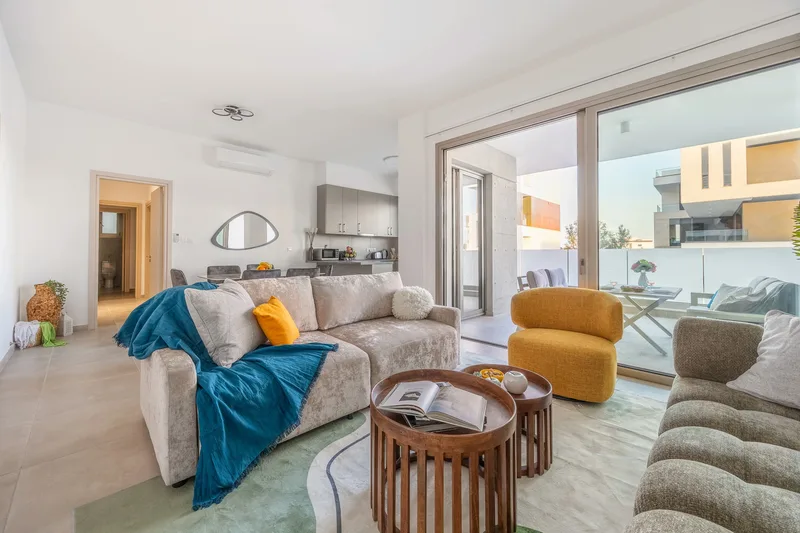
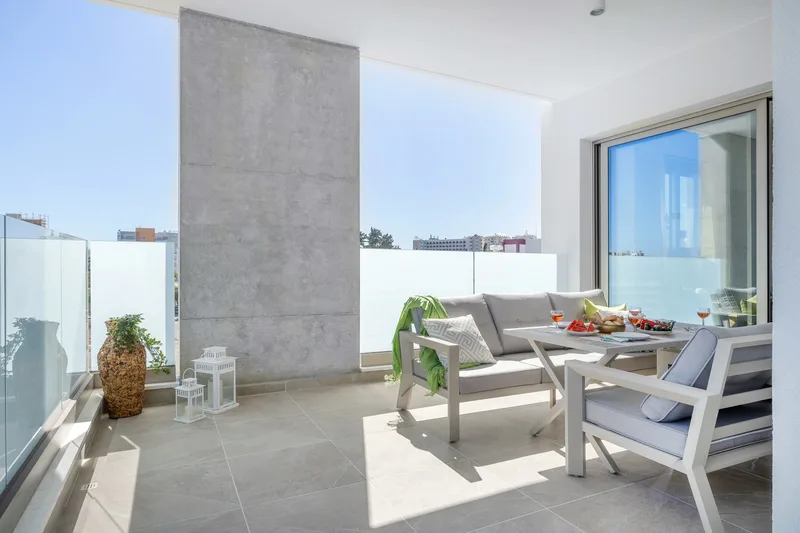
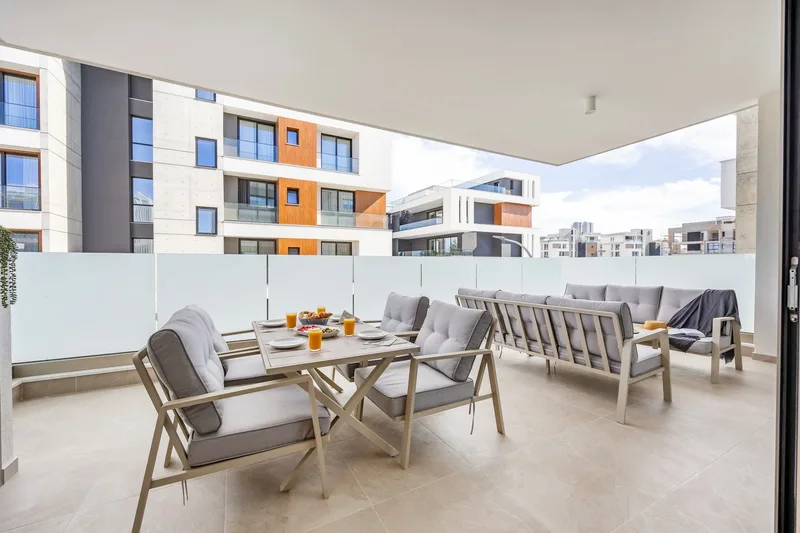
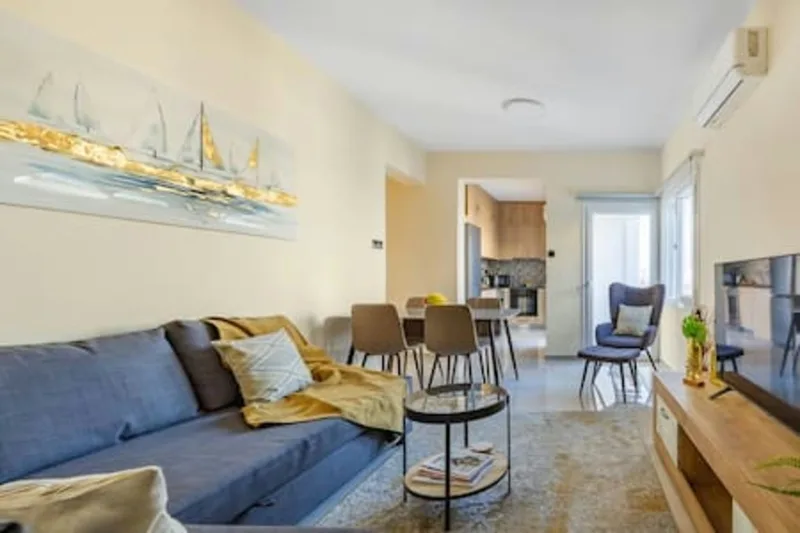
What most moving to Cyprus guides won’t tell you is that the first 60 days are the hard part. After that, everything accelerates. This is the handbook we wish someone had handed us: healthcare registration, school enrolment, residency paperwork, honest cost of living numbers, and the neighbourhood knowledge that determines whether your first year feels like an adventure or an ordeal. If you’re still weighing whether Cyprus is the right fit, our overview of the lifestyle and tax advantages drawing expats to the island is worth reading first. For a broader geographic orientation, our Cyprus travel guide covers the lay of the land. If you haven’t visited yet and want to get your bearings before committing to a move, our first time visiting Cyprus guide covers everything you need to know before you land - and if Paphos is on your itinerary, our Paphos Old Town guide is worth bookmarking before you go. If you want a feel for day-to-day costs before committing, our guide to enjoying Cyprus without breaking the bank shows how affordable life here can actually be - and if you’re considering an extended trial run before signing a long-term lease, our guide to renting a villa for a month and saving up to 50% explains why a long stay often works out cheaper than you’d expect. If you want a sense of what family-sized Cyprus living actually looks like in practice, this walkthrough of a spacious Limassol apartment with a large terrace gives a realistic feel for the kind of space your budget can secure. But if you’ve already decided and need the practical reality, keep going.
 Why So Many Expats Are Choosing Cyprus Right Now
Why So Many Expats Are Choosing Cyprus Right Now
Cyprus recorded over 18,000 new residence permits issued to non-Cypriot nationals in 2023, a figure that has roughly doubled since 2018. Familiar drivers explain the trend: EU residency rights, a corporate tax rate of 12.5%, the non-domicile tax regime that exempts dividends and interest for up to 17 years, and a quality of life that northern Europe simply cannot match for cost.
But the hesitation is familiar too. People worry about healthcare quality. They worry about whether their children will fall behind academically. They worry about bureaucracy conducted in Greek, about banking restrictions left over from the 2013 crisis, about whether “island life” means isolation from the professional world they’re used to.
Most of these fears are either outdated or overstated. Healthcare has been transformed since 2019. International schooling is well established in three cities. Banking is functional if you know which institutions to approach. Bureaucracy is real, but it is finite and navigable. We’ll cover each of these in turn, with specific institutions, costs, and timelines.
Healthcare: What the System Actually Looks Like
Cyprus launched GESY (the General Healthcare System) in June 2019, and it changed the equation for residents and relocators alike. GESY is a universal healthcare scheme funded through contributions from salaries, pensions, and income. If you are employed, self-employed, or receiving a pension in Cyprus, you contribute between 2.65% and 4% of your income. In return, you receive access to GPs, specialists, diagnostics, pharmaceuticals, and hospital care with minimal co-payments.
EU citizens who register as residents are eligible. Non-EU residents with a valid residence permit (MEU1 or ARC) can also enrol. Registration requires a visit to a GESY-affiliated GP, who becomes your personal doctor and your gateway to specialist referrals. You will need your Cyprus ID or residence card, your social insurance number, and proof of address. Registration itself takes under 30 minutes. Choosing the right GP takes longer, and we recommend asking locally rather than picking at random from the GESY portal.
Co-payments under GESY are modest: 1 euro for a GP visit, 6 euros for a specialist, and 1 euro per prescription (capped per item). Inpatient hospital care carries no additional charge.
For those who want faster specialist access or prefer specific consultants, private healthcare runs alongside GESY. A private GP consultation costs 40 to 60 euros. Specialist appointments range from 60 to 120 euros. Private health insurance for a family of four typically costs 3,000 to 5,000 euros annually, depending on coverage and age.
Hospitals worth knowing: Limassol General Hospital handles the south coast’s public caseload and has expanded its emergency department significantly. Paphos General Hospital serves the western district and is adequate for most needs, though complex cases often transfer to Nicosia. For private care, Apollonion Private Hospital in Nicosia (4.2 stars, 380 reviews on Google) is the most comprehensive private facility on the island, with strong cardiac and orthopaedic departments. Iasis Hospital in Paphos (4.1 stars, 290 reviews on Google) offers a modern private alternative on the west coast.
One honest caveat: GESY waiting times for non-urgent specialist appointments can stretch to four to six weeks. If speed matters, budget for private top-up insurance or plan to pay out of pocket for specific consultations.
Schooling Your Children: Options, Costs, and How to Choose
State schools in Cyprus are free, teach primarily in Greek, and follow the Cypriot national curriculum. For families planning a permanent move who want their children to integrate linguistically, state schooling is a legitimate option. Children under eight typically pick up Greek within one to two academic years. Older children face a steeper curve, and many state schools now offer Greek language support classes for non-native speakers.
Most relocating families, however, choose international or private English-language schools. Cyprus has credible options following British (IGCSE and A-Level), International Baccalaureate, and in some cases American curricula.
Costs vary meaningfully. Annual tuition at a reputable international school ranges from 5,000 to 12,000 euros depending on the year group, with secondary years at the higher end. Registration fees, school bus transport (often 1,500 to 2,500 euros per year), uniforms, and extracurricular activities add another 2,000 to 3,000 euros annually.
Specific schools worth investigating: The Grammar School Nicosia (4.3 stars, 120 reviews on Google) is one of the oldest English-language private schools on the island, with strong academic results and a British-style curriculum. In Limassol, Pascal English School Limassol offers classes from pre-primary through secondary with A-Level preparation. Heritage Private School Limassol follows the British curriculum and has built a solid reputation among expat families in the Germasogeia area. In Paphos, Foley’s International School (4.0 stars, 85 reviews on Google) is the primary English-language option and draws a heavily international student body.
Your choice of residential area directly affects your school options. Limassol has the widest selection, with five or six credible English-language schools spread across the city. Paphos has fewer choices but a tighter, more supportive expat school community. Nicosia offers the strongest academic institutions but is less popular with coastal lifestyle seekers.
If you are moving mid-year, contact schools early. Most hold waiting lists for popular year groups, and January or April starts are possible but require advance coordination. Ask about integration support, buddy systems, and whether the school has experience with children transitioning from your home country’s system. Good schools will answer these questions without hesitation.
 Finding a Place to Live: Renting Before You Buy
Finding a Place to Live: Renting Before You Buy
Our strongest recommendation to every family considering a move is simple: rent before you buy. A neighbourhood that looks perfect on Google Maps may not suit your daily routine. Your school run matters more than the sea view. Supermarket proximity matters more than the pool size.
A short-term furnished rental gives you a practical base while you sort school enrolment, residency paperwork, and the hundred small decisions that determine your quality of life. One to three months in a well-located rental lets you test the commute, meet other parents at the school gate, and understand which streets flood in November. This is not wasted money. It is the most efficient research you can do.
For families in Limassol, Germasogeia is the default expat residential zone for good reason: it sits between the tourist strip and the eastern suburbs, with supermarkets, pharmacies, schools, and motorway access within minutes. Agios Tychon offers a quieter residential feel with newer builds, slightly lower rents, and proximity to the Amathus coast road.
In Paphos, Kato Paphos places you close to the harbour, the international school, and the administrative offices where you will spend your first weeks. Yeroskipou is a family favourite: a residential suburb east of the city centre with good state school provision, two large supermarkets, and rental prices that are 20% to 30% below central Limassol equivalents.
What to look for in a rental: fibre broadband availability (check with Cyta or Epic before signing), proximity to your chosen school, distance to a full-service supermarket (not a mini-market), air conditioning in every bedroom (non-negotiable in summer), and covered parking if you plan to own a car.
When you are ready to move beyond renting, our guide to buying property in Cyprus covers the legal process, title deed considerations, and the areas where values are currently moving.
Residency, Tax Numbers, and Bank Accounts
Paperwork is real. It is not insurmountable, but it requires patience and documentation. Here is the sequence.
EU citizens must register with the Civil Registry and Migration Department within four months of arrival. You will complete the MEU1 form and provide your passport, proof of employment or sufficient resources, health insurance (or GESY registration), and proof of address. Submit through the Civil Registry and Migration Department in Nicosia or through district offices such as the District Administration Office in Paphos. Processing takes two to four weeks. You receive a yellow registration slip, which is your proof of legal residence.
Non-EU citizens follow a different path and will need to apply for a residence permit (ARC) based on employment, self-employment, or as a visitor with sufficient means. Documentation requirements are heavier, typically including certified bank statements, criminal record clearance, and medical examination results.
Your Tax Identification Code (TIC) is obtained from the Cyprus Tax Department in Limassol or the equivalent office in your district. Bring your passport, residence registration, and proof of address. A TIC is essential for employment, self-employment, property purchase, and vehicle registration. Allow one to two weeks for processing.
Opening a bank account requires your passport, proof of address, TIC, and a reference letter from your current bank. Bank of Cyprus and Hellenic Bank are the two main domestic institutions. Both are functional for everyday banking. Expect the account opening process to take two to three visits and up to two weeks for full activation. International transfers work but can be slow through domestic banks. Many expats maintain a Wise or Revolut account alongside their Cypriot bank for faster cross-border payments.
Vehicle registration and licence exchange follow later. EU driving licences are valid in Cyprus, but if you plan to stay long-term, exchanging your licence for a Cypriot one simplifies insurance and roadside interactions. Importing a vehicle carries customs considerations that depend on your country of origin and the vehicle’s age.
Cost of Living: Honest Monthly Numbers
Any honest moving to Cyprus guide should give you real figures, so here they are. For a family of four in Limassol, these are realistic monthly costs based on current 2025 data.
Rent for a three-bedroom furnished apartment: 1,200 to 2,000 euros depending on area and spec. Groceries from a supermarket such as AlphaMega or Papantoniou: 800 to 1,000 euros. Utilities including electricity, water, and internet: 200 to 350 euros (higher in summer due to air conditioning). School fees for two children at an international school: 800 to 1,800 euros per month when annualised. Car fuel and insurance: 250 to 350 euros. Dining out twice a week at a mid-range restaurant: 300 to 400 euros.
A realistic all-in monthly budget for a family of four in Limassol sits between 3,800 to 6,200 euros depending on schooling choices and lifestyle.
Compared to the UK, groceries are roughly 15% cheaper. Rent in Limassol is comparable to medium-sized UK cities but well below London. Dining out costs roughly 30% to 40% less than equivalent meals in Germany or Scandinavia. Electricity is expensive by European standards, and summer bills can surprise newcomers.
Costs that catch people off guard: school bus fees (often not included in quoted tuition), annual car servicing (parts for European vehicles cost more due to import), private health top-ups, and higher prices for imported goods. Organic produce, speciality foods, and northern European brands carry significant mark-ups.
Where to save: eat seasonally and locally. Cypriot fruit, vegetables, and halloumi are excellent and cheap. Use GESY rather than defaulting to private for everything. Choose a residential area outside the premium coastal strip. Where not to cut corners: broadband quality, air conditioning maintenance, and school choice. These three things define your daily comfort.
Your First 30 Days: A Practical Arrival Checklist
Week one. Buy a local SIM card (Cyta, Epic, or PrimeTel, all available at the airport). Do a full supermarket shop. Contact your chosen school to confirm enrolment documents and start dates. Register with a GESY GP. If you have not yet visited in person, consider a family scouting trip before committing to a neighbourhood.
Week two. Book your MEU1 or ARC appointment at the migration department. Apply for your TIC at the tax office. Begin the bank account opening process. Arrange health insurance if opting for private cover alongside GESY. Start exploring the neighbourhood in earnest: locate your nearest pharmacy, your preferred bakery, the weeknight taverna that will become your default.
Somewhere around the end of week two, something shifts. The admin starts to feel less like a mountain and more like a checklist with most items already crossed off. Lean into that momentum.
Weeks three and four. Follow up on any pending applications. Confirm school enrolment and arrange transport. If you have imported a vehicle, begin the registration process. Introduce yourself to neighbours. Join a local expat Facebook group for your area, not for the complaining (though there will be some) but for the practical recommendations that save you hours of guesswork.
One final note on pace. Cyprus operates on a timeline that will feel slow if you arrive with northern European expectations. Government offices close at 1pm several days a week. August is essentially a national pause. Responses to emails take longer than you are used to. This is not inefficiency for its own sake. It is a culture that prioritises human interaction over transactional speed. Resist the urge to fight it. Within six months, most newcomers admit they prefer it.
Here is the practical reality of relocating distilled to one paragraph: the first 60 days require effort and patience, and every day after that gets simpler. Healthcare works. Schools are credible. Cost of living, while rising, remains favourable. And the quality of daily life, the mornings on the terrace, the winter sunshine, the sea ten minutes from your door, is the reason your spreadsheet exists in the first place.
Title candidates:
- Moving to Cyprus Guide: The Honest Handbook for Families Relocating in 2025 (preferred)
- Moving to Cyprus Guide: Healthcare, Schools, Costs and Residency Explained
- Moving to Cyprus: A Step by Step Relocation Guide for Families
Meta description: Real costs, school options, GESY healthcare, residency steps and neighbourhood picks from people who’ve helped hundreds of families relocate to Cyprus.
Excerpt: You’ve opened the spreadsheet, compared the school fees, and started reading job listings. Here’s the moving to Cyprus guide we wish someone had handed us: specific costs, honest timelines, and the neighbourhood knowledge that makes your first year work.
Editor’s note on structure: The assignment specified “problem-solution,” which is not a defined structure in the Tone Bible. This draft follows a First-Timer’s Handbook structure (step by step for complete beginners, reassuring, thorough, no assumed knowledge) at approximately 2,450 words, within the 2,000 to 2,500 target. Flagging for the assigning editor: this is the third First-Timer’s Handbook in the current content calendar, after “Getting Married in Cyprus” and “Paphos Old Town Guide.” If variety is a concern, the next relocation piece could use a Q&A/Myth-Busting or Deep-Dive Profile structure instead. Please confirm the structure label before publication.