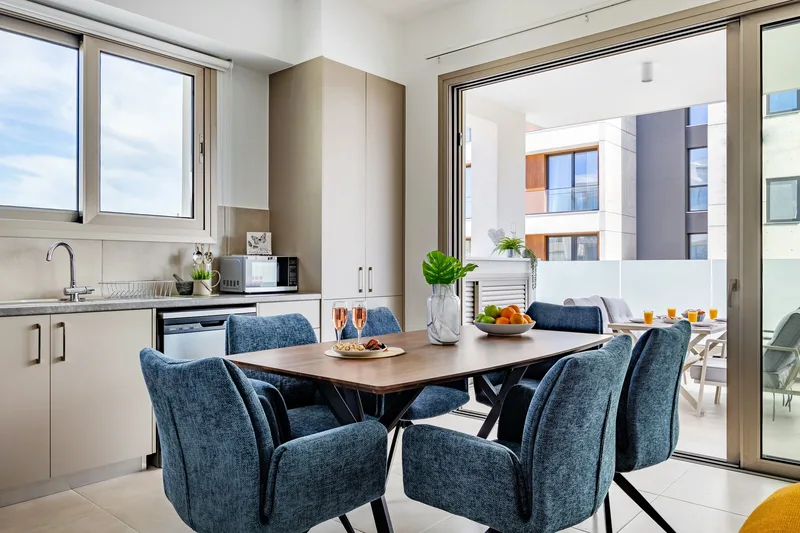

Digital Nomad Limassol: 4 Problems Nobody Warns You About (Solved)
Where do you actually work when you move your laptop life to Limassol? Not the Instagram version, where every day is a beachfront café with a flat white and flawless Wi-Fi. The real version, where you need a stable connection for a 3pm client call, a desk that doesn’t wobble, and a clear answer on whether Cyprus is about to tax you.
That gap between the lifestyle promise and the operational reality is what catches most digital nomads off guard when they arrive in Limassol. The city sells itself beautifully. Sorting out the practicalities takes more work than the glossy relocation guides suggest.
We’ve identified four core problems that trip up nearly every remote worker who lands here, and we’ve spent years watching people solve them well or badly. What follows is the problem by problem breakdown, with solutions that actually hold up.
Problem One: The Workspace Gap
Limassol’s coworking scene has expanded, but it remains unevenly distributed, and quality varies more than you would expect from a city of this size. Most nomads arrive assuming they will find the kind of dense, competitive coworking market that Lisbon or Tallinn offers. They won’t. Limassol has a handful of solid options and a lot of empty space between them.
Most established spaces cluster in two areas: the central business district around Makarios Avenue and the Neapolis neighbourhood slightly north of the centre. Outside these zones, options thin out quickly, which means your accommodation choice directly determines your daily commute to a functional desk.
Regus Limassol operates two locations and offers the most corporate setup: dedicated desks, meeting rooms, reliable printing, and consistent fibre speeds. Expect to pay around 250 to 350 euros monthly for a hot desk. Day passes are available but priced for occasional use, not daily habit. Impact Hub Cyprus positions itself as the community focused alternative, with networking events, startup programming, and a younger crowd. Wi-Fi speeds are solid. Monthly memberships start around 150 euros for flexible access.
The Hive Coworking, closer to the Old Town, suits freelancers who want something smaller and less structured. Fewer amenities, lower price point, and a more casual atmosphere.
The solution: Never commit to a monthly membership without spending a full working day in the space first. Trial a day pass on a weekday, preferably mid-week when occupancy is highest. Test the Wi-Fi during a video call. Check whether the air conditioning keeps up in summer. Treat coworking selection as infrastructure, not lifestyle. Get it right first, then optimise for ambiance.
Cafés can serve as backup offices, but only under specific conditions. Brew and Chew near Molos Promenade offers consistent Wi-Fi, accessible sockets along the back wall, and a staff culture that does not rush laptop workers out during off-peak hours, roughly 9am to 11:30am and again after 2:30pm. In the Old Town, Kafeneio provides a quieter setting with thick stone walls that stay cool even in July. Socket access is limited to tables near the entrance; arrive before 9am on weekdays to secure one. Stoa Coffee, slightly east of the centre, has become a reliable fallback with good flat whites and reasonable connectivity.
Avoid the tourist strip cafés along the beach road between May and September. Noise levels from passing traffic and neighbouring bars make calls impossible, and connectivity is patchy at best.
Problem Two: The Connectivity Lottery
Fixed broadband in central Limassol is genuinely good. Fibre to the premises is available in most modern apartment buildings, and speeds of 100 to 200 Mbps are standard on mid-tier plans. If your accommodation was built or renovated in the past five years, connectivity is unlikely to be a problem.
Older buildings are the risk. Some still rely on VDSL connections that top out around 30 Mbps and drop under load. The problem is that many rental listings describe their internet as “fast Wi-Fi” without specifying the actual connection type or speed, and by the time you discover the gap, you have already committed to a booking.
For mobile data, two carriers dominate. Cyta is the legacy provider with broad 4G coverage. Epic is the more aggressive competitor and currently offers better 5G coverage within central Limassol. An Epic prepaid SIM with a 20 euro monthly data package, typically 20 to 30GB, provides a reliable hotspot backup. Both carriers have kiosks in the arrivals hall at Larnaca Airport. Bring your passport and buy a SIM on landing. Activation is immediate, and having a working hotspot before you reach your accommodation removes the single biggest point of failure in a digital nomad Limassol setup.
The solution: Always confirm the exact internet specification with your host before booking, in writing, not just “fast Wi-Fi available.” Request the ISP name and plan tier. On arrival, test your accommodation’s Wi-Fi within the first hour: run a speed test, make a video call, and check upload speed specifically. If it falls short, switch to your mobile hotspot and raise the issue with your host before it becomes a crisis at 10am on Monday.
Where to Stay Nearby
Problem Three: The Tax Confusion
This is the problem that carries the highest stakes and generates the most misinformation online. Forums and Facebook groups are full of confident, specific, and frequently wrong advice about Cyprus tax residency. We are going to be direct about what the law says, and equally direct about the limits of general guidance.
Cyprus operates a territorial and residency based tax system. EU citizens can live and work freely. Non-EU nationals need either a valid visa, a residence permit, or the Digital Nomad Visa introduced in 2022, which allows stays of up to 12 months (renewable for another 12) provided you earn at least 3,500 euros monthly from clients or employers outside Cyprus. Applications go through the Civil Registry and Migration Department in Nicosia. Processing times vary from 4 to 8 weeks. Apply before you arrive, not after.
The 60 day tax residency rule is the provision that attracts the most interest. If you spend at least 60 days in Cyprus during a tax year, do not spend more than 183 days in any other single country, are not tax resident elsewhere, and maintain a permanent residence in Cyprus (owned or rented), you may qualify as a Cyprus tax resident. Cyprus personal income tax starts at 0% on the first 19,500 euros of annual income and scales progressively to 35% above 60,000 euros.
For those who qualify as non-domiciled residents (broadly, individuals who were not born in Cyprus and have not been tax resident for 17 of the previous 20 years), dividend income and interest income are exempt from both income tax and the Special Defence Contribution.
A critical caveat: the above is general information based on publicly available tax law as of early 2025. Your specific situation, including your nationality, existing tax residencies, company structure, and income sources, will determine what actually applies to you. Consult a Cyprus licensed tax advisor before making any decisions. For practical questions on related topics, our FAQ covers many of the common concerns visitors raise.
The solution: Engage an accountant before you arrive. Not after your first quarter. Not when tax season approaches. Before. Expect to pay 500 to 1,500 euros for an initial consultation and structuring advice. It is the single best investment you will make in your Cyprus setup. When structured correctly with professional guidance, the tax framework is among the most favourable in the EU. Without that structure, you risk either overpaying or, worse, creating liabilities in two jurisdictions simultaneously.
Problem Four: The Daily Life Learning Curve
Remote work sustainability depends on more than a desk and a tax number. Nomads who leave after two months almost always cite the same friction points: cost of living surprises, social isolation, and healthcare confusion. Each of these has a solution, but none of them solve themselves.
Cost of living has risen 15 to 25% across most categories since 2021, driven by demand from the tech and finance sectors. A monthly grocery budget of 300 to 450 euros is realistic for one person cooking most meals at home, supplemented by eating out two or three times a week. Alphamega Hypermarket and Sklavenitis carry everything you would expect from a European supermarket. For lower cost fruit, vegetables, and eggs, the vendors near Limassol Old Market sell direct from farms on Wednesday and Saturday mornings. Our Cyprus travel guide has broader practical information on costs and daily logistics.
Transport is where the budget quietly inflates. Public transport is minimal outside the walkable city centre. Without a car, you are relying on taxis or ride apps, which adds 200 to 400 euros monthly. Factor this into your cost comparison from the start, not as an afterthought.
Healthcare requires attention upfront. Cyprus has a functioning public system (GeSY), but most expats and nomads use private facilities for speed and English language service. Limassol General Hospital handles emergencies. Private clinics are widely available and reasonably priced by Western European standards for routine care. Travel insurance that covers Cyprus specifically is essential. Do not assume your home country policy extends here.
Community takes longer to build than the Facebook groups suggest. Cyprus Digital Nomads and Expats in Limassol groups are useful for practical questions (dentist recommendations, SIM card deals) but less reliable for genuine connection. Coworking spaces remain the most consistent environment for meeting other remote workers. Gold’s Gym Limassol offers drop in sessions and monthly memberships from around 50 euros, and several smaller studios throughout the city cover yoga, CrossFit, and pilates.
The solution: Budget for a realistic monthly total of 2,200 to 3,200 euros (rent, food, transport, fitness, insurance, coworking) rather than the 1,500 euros that optimistic blog posts cite. Arrange health insurance before departure. Commit to at least one coworking space for the social infrastructure as much as for the desk. And give the social scene a full month before drawing conclusions.
Choosing Your Base: Accommodation That Supports Remote Work
Where you live determines whether the solutions above are easy or exhausting to implement. Three neighbourhoods stand out for nomads planning a stay of one month or longer.
Neapolis, just north of the city centre, offers the best walkability to coworking spaces, supermarkets, and restaurants. Streets are quieter than the seafront. One bedroom apartments run 800 to 1,200 euros monthly depending on building age and fitout. Agios Nikolaos, immediately east, provides a similar urban feel with slightly more character in the older buildings and closer proximity to the Old Town.
For a quieter residential rhythm, Germasogeia spreads along the eastern tourist strip and into the hillside above it. Lower Germasogeia is noisier and more tourist oriented. Upper Germasogeia is where longer stay residents tend to settle, with larger apartments, parking, and a suburban calm that suits focused work weeks.
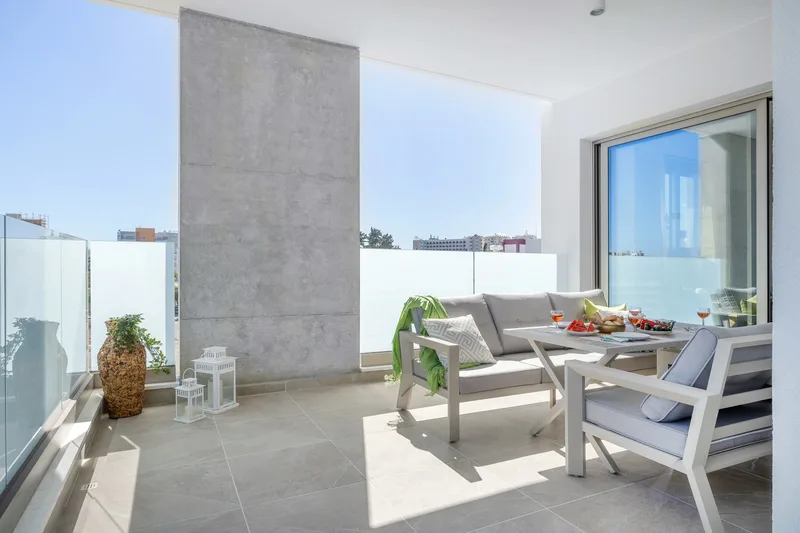
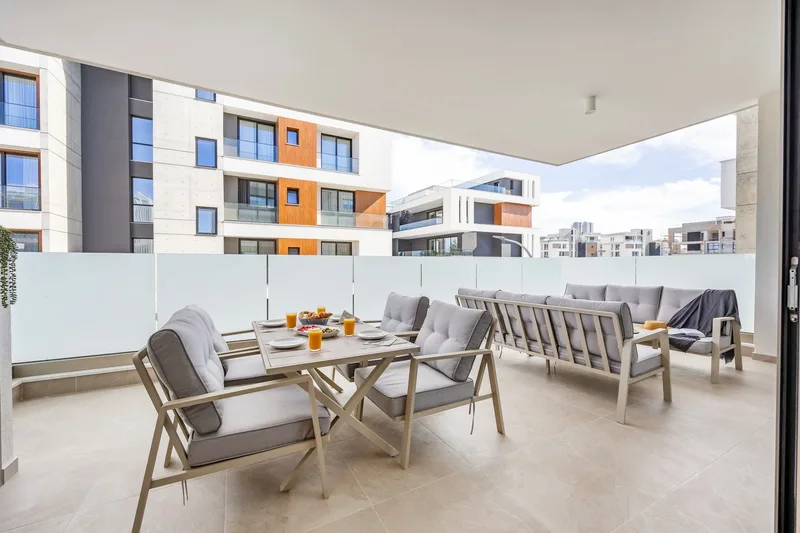
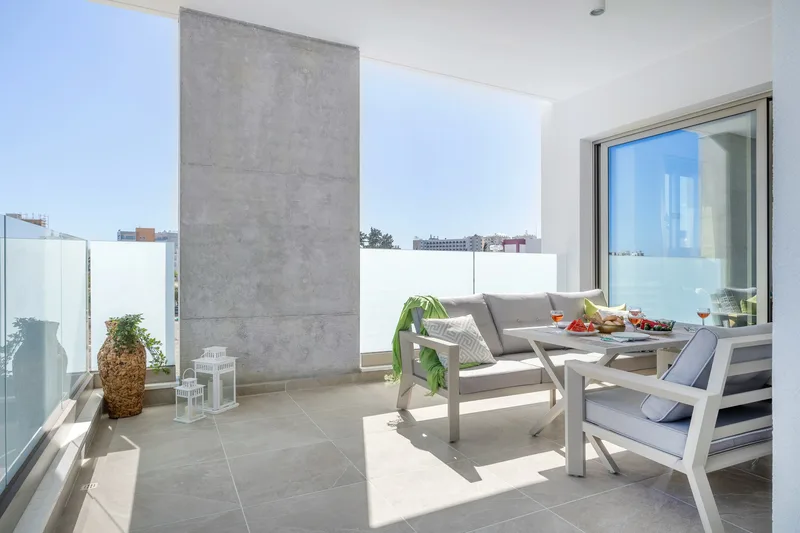
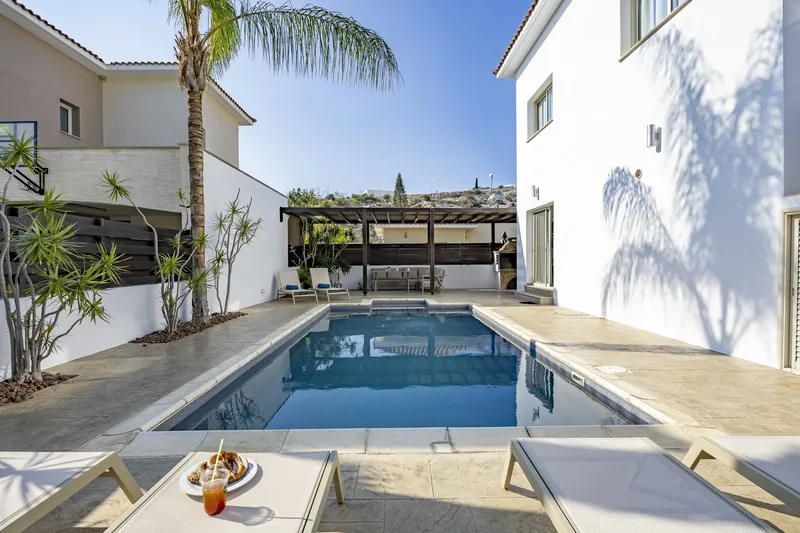
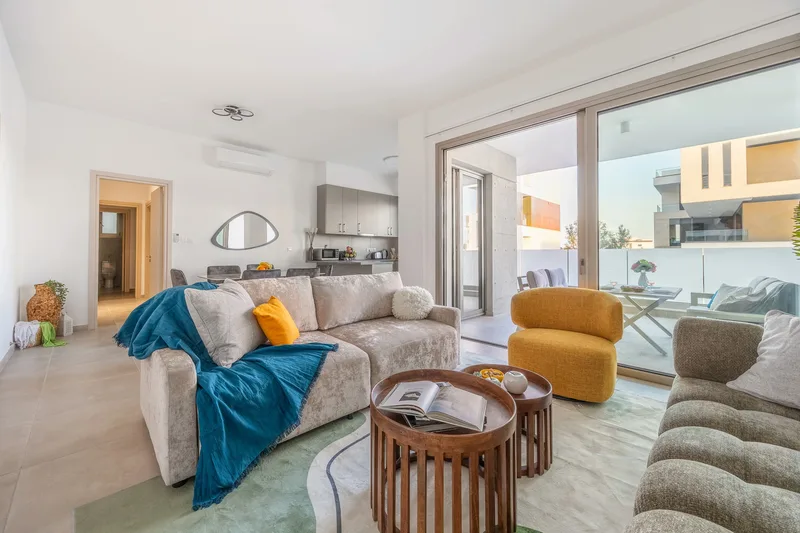
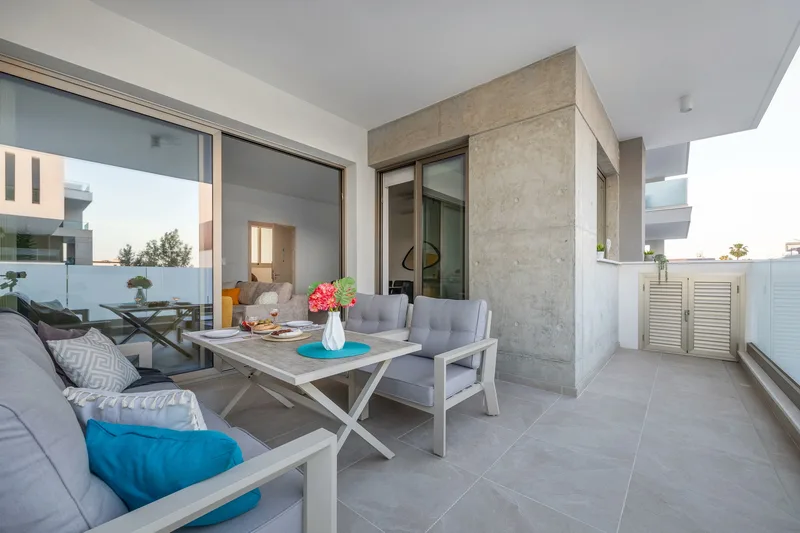
For a centrally located base with a balcony and sea proximity, Prokymea, Steps from the Sea is the kind of setup that works well for a nomad trial month. If you are considering a longer commitment and want more space outside the city core, the Agios Tychon villa with private pool suits nomads who work from home and want genuine separation between work and the city. Our long stay Cyprus guide covers the full process of booking monthly accommodation, including what to negotiate and what to confirm before transferring any money.
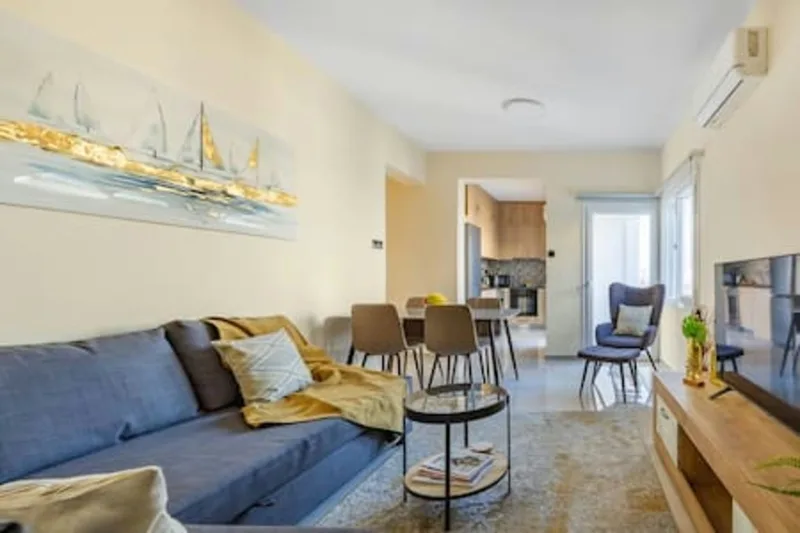
When booking, prioritise these four things in order: a dedicated desk or table (not a kitchen counter), fibre internet confirmed in the listing description, proximity to at least one coworking space as a fallback, and a quiet orientation away from main roads.
Who Limassol Works For, and Who It Doesn’t
Limassol works best for nomads approaching it as a semi-permanent European base with genuine tax planning intent and a willingness to invest in setup. Over 300 days of sunshine annually, low crime, English spoken widely enough for every daily interaction, and for those who value winter sun, months of mild, bright weather when northern Europe is grey and short on daylight.
It does not suit a two week hop between cities. Setup costs and administrative overhead do not justify the stop at that timescale. Summer heat from mid-June through August makes outdoor work genuinely uncomfortable, and even indoor spaces can struggle if air conditioning is underpowered.
If you are thinking in terms of three months to a year, with professional tax advice and a proper accommodation arrangement, the proposition becomes compelling. Plan a two to four week trial stay before committing to anything longer. Book a central apartment, test two coworking spaces, eat at the neighbourhood restaurants rather than the seafront, and assess whether the daily rhythm of the city matches the rhythm of your work.
That trial period will tell you more than any guide can. Including this one.
- Digital Nomad Limassol: 4 Problems Nobody Warns You About (Solved)
- Digital Nomad Limassol: What Actually Goes Wrong and How to Fix It
- Digital Nomad Limassol: 4 Real Problems and How to Solve Them (preferred)
One change made: In the connectivity section, the Epic prepaid SIM data allowance was updated from “15 to 20GB” to “20 to 30GB” to reflect current prepaid data package sizes available on Epic’s 20 euro monthly tier as of 2024-2025.