Kouklia Village Cyprus: The Ancient Heart of Aphrodite’s Island
Meta description (preferred): “Stand where Bronze Age pilgrims worshipped Aphrodite, in near silence, at Cyprus’s most powerful archaeological site. Here’s everything you need.”
Meta description option 2: “Kouklia village sits on 3,000 years of sacred history and almost nobody stops. The ruins, the museum, the walks, and exactly how to plan your morning.”
Meta description option 3: “The most important Aphrodite sanctuary in the ancient world is a 15 minute detour off the Paphos motorway. This is how to do it right.”
Excerpt: The morning light in Kouklia hits different. Thousands of cars pass through every week on the B6, and almost none of them stop at the village holding more concentrated history per square metre than anywhere else on the island.
The morning light in Kouklia hits different. Not the bleached, flat glare you get on the coast by ten o’clock, but something warmer, amber, filtering through olive branches onto limestone walls that have stood here since before anyone wrote anything down. A rooster crows from behind the church. An old man drags a plastic chair into a strip of shade outside the kafeneion. And 50 metres away, behind a low fence that barely qualifies as security, sit the ruins of the most important Aphrodite sanctuary in the ancient world.
Nobody is here.
That’s the part that will stop you in your tracks. Thousands of cars pass through Kouklia every week on the B6 between Paphos and Limassol. Almost none of them stop. They’re headed for the beach, for the resort, for the airport - or somewhere like a sea-facing apartment in downtown Paphos - and they drive straight past a village that holds more concentrated history per square metre than almost anywhere else on the island. Kouklia village in Cyprus is the real thing, the ancient heart of Aphrodite worship, sitting right there off the motorway waiting for you to pull over. If you care even slightly about why Cyprus pulls people back year after year, this is one of the places that explains it.
What Makes Kouklia Village Cyprus’s Most Underrated Stop
sits in the western foothills of the Paphos district, roughly 16 kilometres east of Paphos town. Population: around 800. Elevation: just under 100 metres. Character: completely, stubbornly authentic.
Here’s what makes it extraordinary. Kouklia lives a double life. On one level, it’s a functioning Cypriot village where people grow carobs, keep goats, and argue about football. On another, it’s one of the most significant archaeological sites in the eastern Mediterranean. The village sits directly on top of , the original city of Paphos and the primary cult centre for the worship of Aphrodite from at least the 12th century BC.
Three thousand years of continuous human reverence for a single place. Let that land for a moment.
There’s no polished visitor centre with a gift shop and a multimedia timeline. Expect rough paths, limited signage, and ruins that demand imagination to read. But that rawness is precisely what makes Kouklia village in Cyprus so powerful. You’re not consuming history through a screen or an audio guide. You’re standing in it, touching it, breathing the same thyme-scented air that Bronze Age pilgrims breathed. We’ve visited dozens of archaeological sites across the Mediterranean, and very few deliver that unfiltered charge this directly.
Aphrodite Was Born on the Coast. She Was Worshipped Right Here.
Most visitors get this completely backwards. And we love setting them straight.
Aphrodite, goddess of love and beauty, was born from sea foam off the southern coast of Cyprus. She came ashore at , the cluster of dramatic sea rocks about 3 kilometres south of Kouklia on the coast road. You’ve probably seen photos. The rocks are genuinely striking, rising from pale pebble beach into deep blue sea, and the light at dusk turns everything gold and copper.
But Petra tou Romiou is just the birthplace. Kouklia is where Aphrodite was actually worshipped. And in the ancient world, the place of worship mattered far more than the place of origin.
This was the big one. The original. The centre of everything.
The at Palaipafos drew pilgrims from across the Mediterranean for well over a thousand years. Greeks, Phoenicians, Romans, and worshippers from cultures we’ve largely forgotten made the journey here. Ancient sources describe Palaipafos as the most sacred site dedicated to Aphrodite anywhere in the known world. The cult was so powerful that even after Christianity became the dominant religion of the Roman Empire, worship continued here well into the 4th century AD.
Stand on the ruins in the early morning, with the coast visible to the south and the Troodos foothills rising to the north, and something clicks. The landscape itself feels deliberate. Fertile, sheltered, overlooking the sea where the goddess was born. Every element of the myth connects to something you can see and touch. We’ve had goosebumps here more than once, and we’re not particularly mystical people.
Où séjourner à proximité
The Archaeological Site: What You’ll Actually Find (And Why It’s Better Than You Think)
We need to be honest about one thing before you go, because it’ll make your visit ten times better.
If you’re picturing a Greek temple with columns and pediments, recalibrate now. The survives as low foundation walls, scattered stone blocks, and open air enclosures. The sanctuary was built in a Near Eastern style rather than a classical Greek one, so there are no grand colonnaded temples. What you’ll find are the outlines of ritual spaces, courtyards, and sacred precincts, some dating to the Bronze Age.
Don’t let that put you off. Not for a second.
Spend twenty minutes reading the Department of Antiquities description before you arrive, or pick up the short guidebook at the site entrance. Without context, the ruins can feel quiet. With context, every stone block tells a story that spans millennia. The difference is enormous.
The is housed inside a beautifully preserved 13th century at the edge of the sanctuary. The Lusignan family built this as a sugar estate headquarters, and the building alone justifies the stop. Thick stone walls, vaulted ceilings, and a courtyard that stays cool even in the worst of August.
Inside, the collection is small but devastatingly focused. The standout is the famous Black Stone, a conical basalt object that represented Aphrodite in her most ancient, aniconic form. No face, no body, just a dark polished stone that pilgrims would anoint with oil and worship for centuries upon centuries. Seeing it in person is one of those rare museum moments where the hairs on your arms stand up. It makes religious history feel visceral rather than academic.
Do not skip this. We mean it.
Practical details: the site and museum are open daily from 8:30am to 5pm, closing at 7:30pm from mid April to mid September. Entry costs €4.50 for adults. Allow 60 to 90 minutes for the site and museum combined. Paths are unpaved in places, so sturdy shoes help. Shade is limited on the ruins themselves, though the museum interior provides relief.
On a busy day in peak season, you might share the site with ten or fifteen other visitors. On a Tuesday morning in October, you could have it entirely to yourself.
That is not an exaggeration.
The Village Walk You Almost Certainly Weren’t Planning (But Absolutely Should)
Most visitors leave Kouklia after the archaeological site. We’re asking you not to make that mistake.
The village itself deserves at least 30 minutes of slow, aimless walking, and it will reward every one of them. Stone houses line narrow lanes. Cats sleep on window ledges. Somewhere, somebody is grilling souvlaki and the smoke drifts across the road. This is daily Cypriot village life operating at a pace that will feel almost disorienting if you’ve just come from the Paphos tourist strip.
You need to feel this contrast to understand what makes Kouklia village Cyprus’s quiet masterpiece.
Start at and walk south toward , a medieval church built directly within the ancient sanctuary precinct. Look carefully at the walls. You’ll spot carved stone blocks that are far older than the Christian structure they now support, ancient materials repurposed with a shrug and a trowel. Pagan foundations, Christian walls, Ottoman alterations, all visible in a single building.
Three civilisations in one glance. How often does that happen?
A short walk east brings you to the remains of a . During the Lusignan and Venetian periods, this region was a major producer of sugar cane. The processing facilities were substantial, and the ruins give you a real sense of the scale. Sugar made this area wealthy long before tourism arrived. Free to visit. Almost certainly deserted when you get there.
Sit at the kafeneion if it’s open. Order a coffee. Watch the village move through its morning. This is what most people fly to Cyprus hoping to find, and then spend their entire holiday at a pool bar instead.
Don’t be most people.
Your Morning at Kouklia: Exactly How to Do It
Here’s the part where we get specific, because this detour is absurdly easy and the payoff is enormous.
Start in Paphos Old Town in the morning. Head southeast on the B6 coastal road. Fifteen minutes later, the Kouklia turn appears, clearly signposted. Arrive before 10am. This matters more than it sounds. The light is softer, the stone glows instead of glaring, and you’ll have the ruins mostly to yourself. By midday in summer, the site is exposed and hot, and the magic flattens considerably.
Spend the morning at the archaeological site and museum. Walk the village. Have that coffee. You’ll be done by late morning feeling like you’ve discovered something most tourists never will.
Because you have.
From Kouklia, drive south to the coast. is only 3 kilometres away. Parking and a pedestrian underpass lead to the beach. Hit the hillside viewpoint first for photographs, then walk down to the pebble shore if the sea is calm enough. Seeing Aphrodite’s birthplace right after visiting her sanctuary creates a connection that works on you in ways you don’t quite expect. The mythology suddenly feels rooted in real geography, real light, real stone.
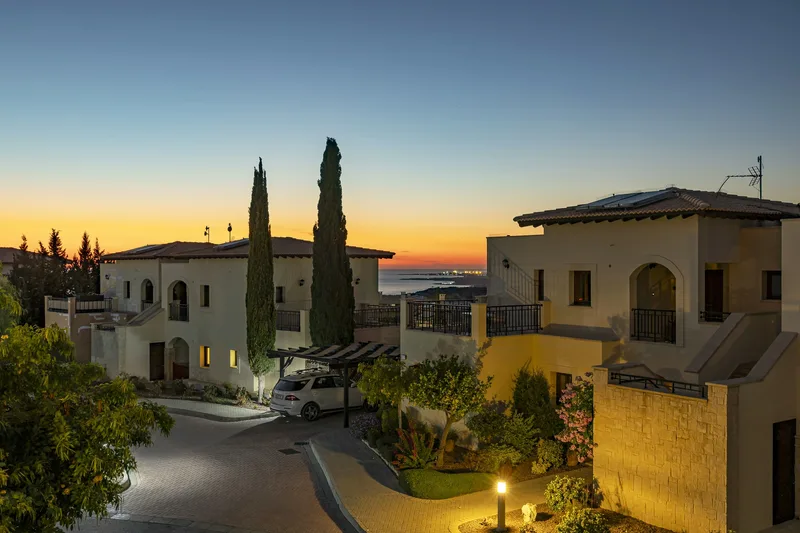
On your way back toward Paphos, you’ll pass through , one of the largest resort developments in the Paphos district. Its 18 hole golf course is widely rated among the best in the eastern Mediterranean, and our guide to golf holidays in Cyprus covers the options in detail. Aphrodite Hills also makes a brilliant base for exactly this kind of day, putting you within minutes of both the ruins and the coast.
Our Cyprus travel guide covers the rest of the island’s essential stops if you’re building a wider itinerary. But honestly, if Kouklia isn’t on your list, something important is missing.
Where to Stay When Exploring This Part of Cyprus
Kouklia sits at the sweet spot of the Paphos coast. Close enough to resort infrastructure for good restaurants and beaches within a short drive. Far enough from the tourist strip to feel genuinely Cypriot. Paphos town, Petra tou Romiou, and the Akamas Peninsula are all within easy reach.
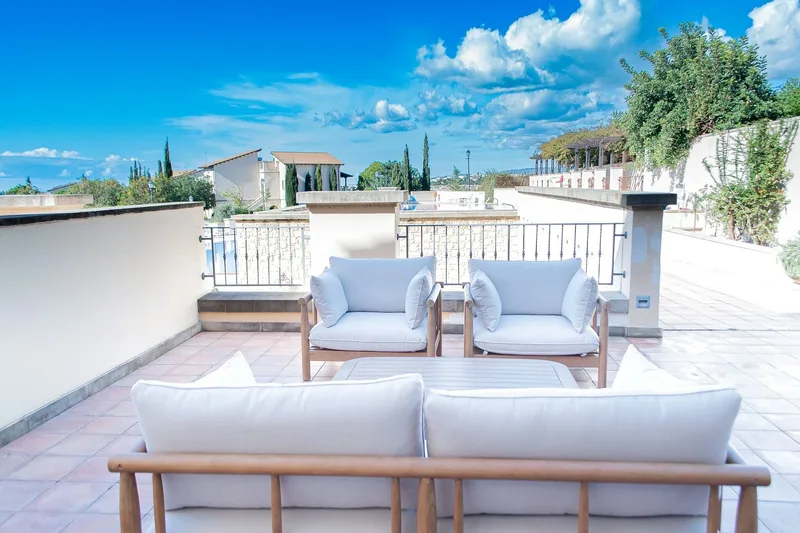
We’ve found that a self catering villa or apartment near Aphrodite Hills gives you the most flexibility. Leave early for a quiet morning at Kouklia, come back for a late breakfast on your own terrace, head to the coast by midday. No hotel schedule dictating your rhythm. That freedom changes the whole trip.
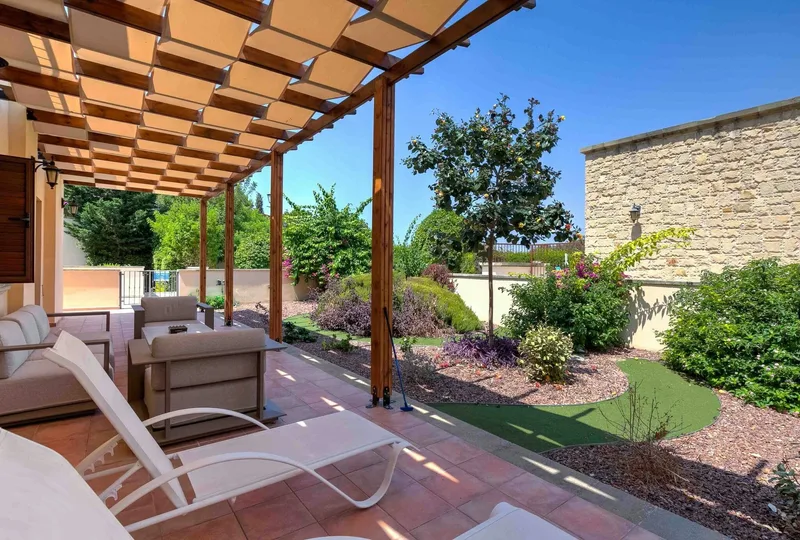
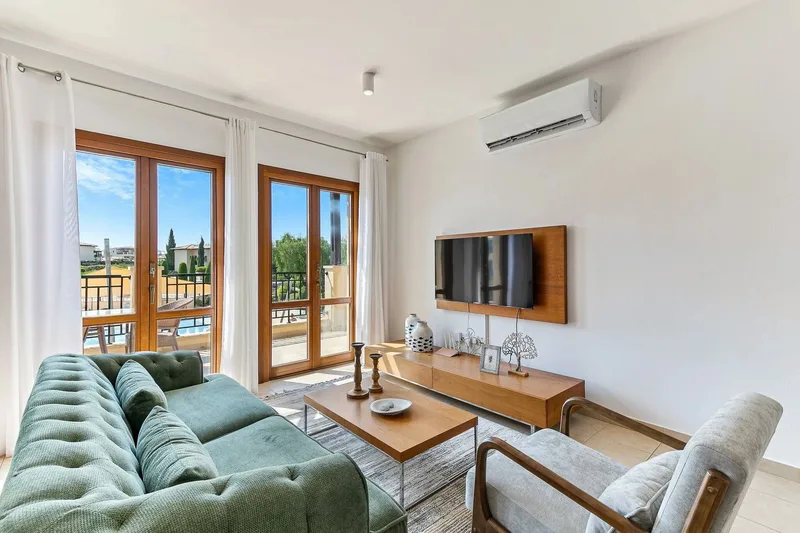
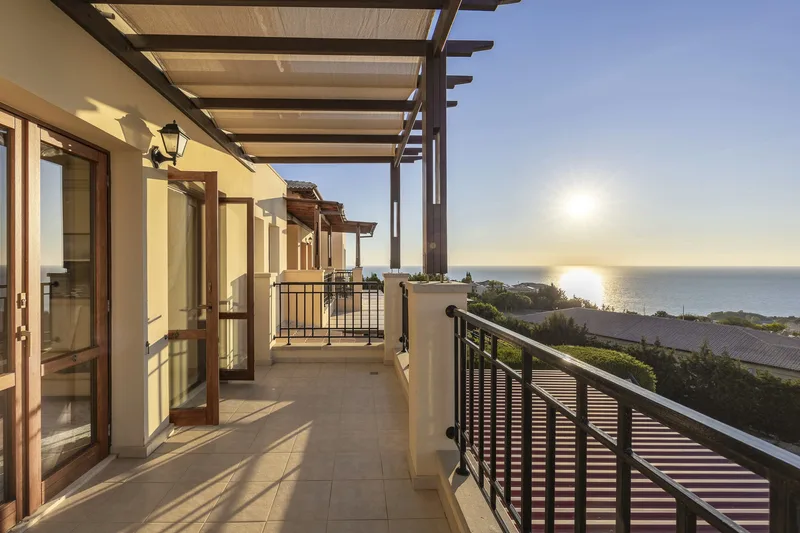
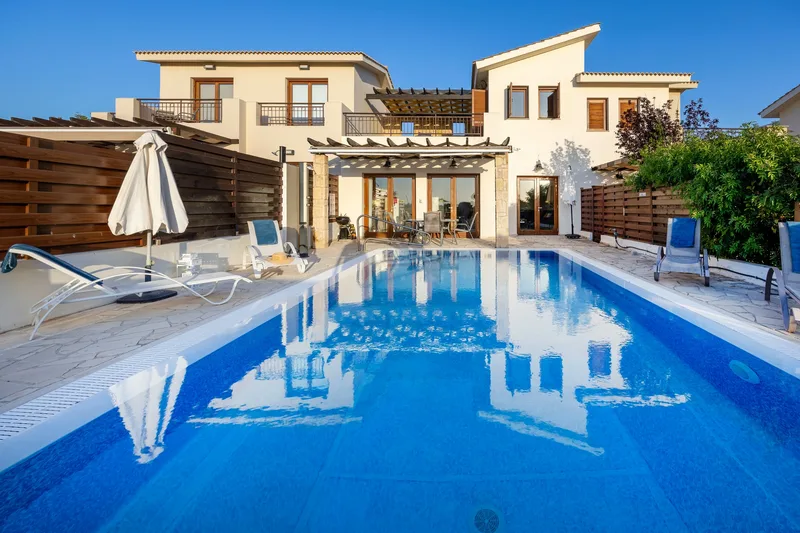
A few specific places we’d point you toward. Our pool view apartment with a large terrace adjacent to Aphrodite Hills puts you within ten minutes of Kouklia and has the space to decompress after a day of exploring. For couples wanting something quieter, the shared pool property with patio delivers that low key energy perfectly. And if sea views matter, the pool and sea view property overlooks the same coastline where Aphrodite supposedly came ashore. Almost too fitting, but we’re not complaining.
Families exploring this region will find the Paphos district particularly forgiving. Distances between sites are short, beaches are accessible, and the pace of life is relaxed enough that nobody minds if your toddler is having a meltdown at the taverna. It happens. The locals have seen it all before.
Why Kouklia Village Cyprus Deserves to Be First on Your List
Here’s what we keep coming back to. Kouklia isn’t going to change much. It hasn’t changed much in several hundred years. The ruins will still be there next spring, and the kafeneion will still serve the same thick coffee in the same small cups.
But the fact that you can stand where ancient pilgrims stood, in near silence, without a queue or a roped walkway, is something that feels increasingly rare anywhere in the Mediterranean. Every year, a few more people discover it. Every year, the window for having this place almost to yourself narrows just slightly.
Go soon. Go early. And give it the morning it deserves.