
Cyprus Meze Guide: How to Eat Like a Local From the First Bite
We’ll admit something that might cost us credibility: the first time we sat down for a proper Cypriot meze, we filled up on bread and dips within twenty minutes. By the time the grilled halloumi arrived, we were already leaning back in our chairs. By the time the lamb kleftiko landed, we were negotiating with our stomachs. The sheftalia? We took them home in a foil swan. It took us three more attempts before we learned how to eat meze properly, and honestly, those were three of the best evenings we’ve ever spent on this island.
If you’re planning your first trip to Cyprus, our travel guide will help you sort the logistics. But this post is about the single experience that defines Cypriot culture more than any ruin, beach, or mountain village ever could. Think of this as your Cyprus meze guide for everything that matters: what to expect, how to pace yourself, and where to find the tables worth sitting at.
What Cypriot Meze Actually Is (and Why It’s Not What You’ve Had Before)
You’ve probably encountered the word “meze” before. Maybe at a Greek restaurant in London where they brought you six small plates and a bill that felt optimistic. Or at a Lebanese place where the hummus was excellent but the whole thing was over in forty minutes. Cypriot meze is neither of those things, and if you’re already thinking about where to sit down for the real thing, our Best Restaurants in Limassol guide covering seven neighbourhoods and 20 places we actually go is a good place to start.
Cypriot meze is a different animal entirely.
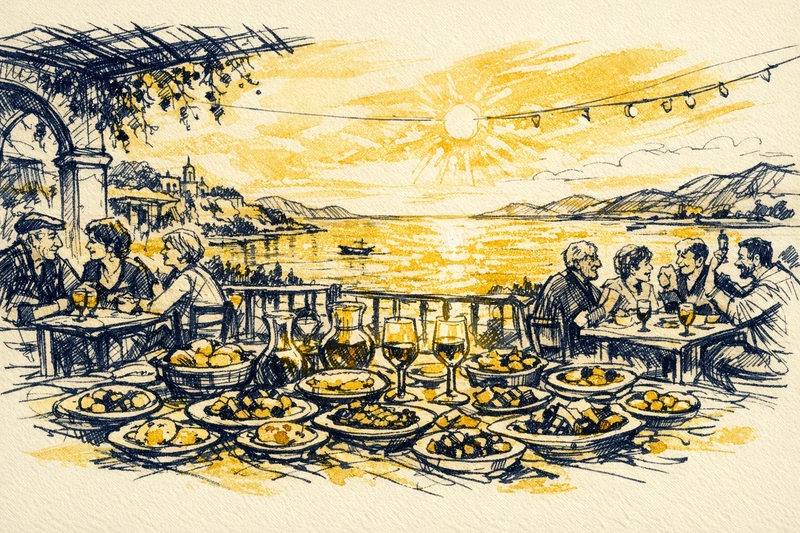
Picture 20 to 30 small dishes arriving at your table in waves over the course of two to three hours. Cold dishes first, then hot starters, then grilled meats or fish, then a main course you genuinely cannot believe is still coming, then fruit and sweets and a digestif that could strip paint. Nobody orders individual plates. You don’t choose from a menu. You sit down, you tell them how many you are, and the kitchen decides the rest.
The Cypriot version borrows from both Greek and Middle Eastern traditions but lands somewhere entirely its own. You’ll find tahini alongside taramosalata. Halloumi next to hummus. Lamb kleftiko sharing table space with loukaniko sausage. It’s a cuisine that reflects the island’s position at a crossroads, and it does so without pretending to be anything other than village food done with serious care.
Budget roughly 15 to 30 euros per person depending on where you eat and whether you choose meat or fish. Block out an entire evening. And do not, under any circumstances, eat a late lunch beforehand.
 The Essential Dishes: What to Expect on Your Meze Table
The Essential Dishes: What to Expect on Your Meze Table
The first wave is cold. Expect a basket of warm village bread, a bowl of olives (usually cracked green, dressed in coriander and lemon), tahini, taramosalata, tzatziki, and sliced lounza, which is a cured pork loin that’s somewhere between prosciutto and something smokier. Halloumi will appear ungrilled at this stage, firm and squeaky, often alongside cubes of fresh tomato and cucumber.
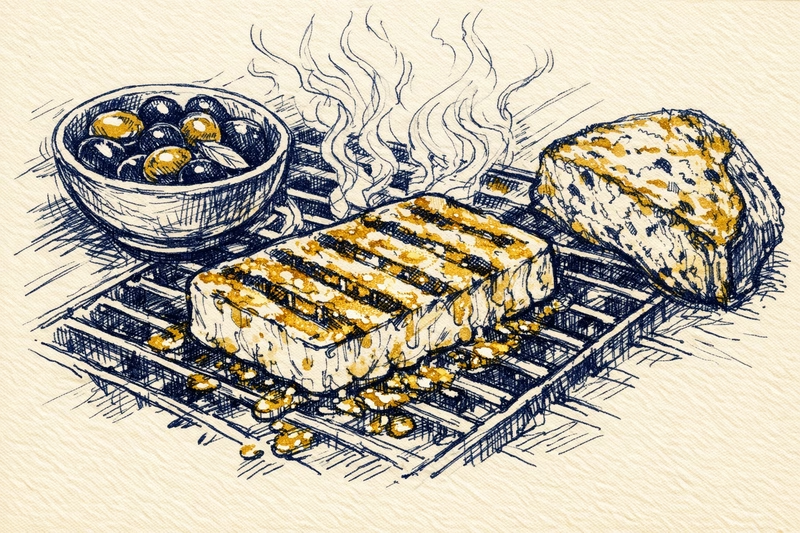
Then the hot plates start. Grilled halloumi now, with those dark char lines and a soft centre. Sheftalia, the Cypriot sausage wrapped in caul fat that no visitor forgets. Kolokasi, a starchy root vegetable braised in tomato that you’ll either love immediately or need two tries to appreciate. Loukaniko, the island’s herby pork sausage, sliced and fried.
Mains follow. Lamb kleftiko that’s been in the oven for hours and falls apart under its own weight. Stifado, a rich beef or rabbit stew with sweet onions. If you’ve ordered seafood meze, this is where the grilled fish, calamari, and prawns arrive.
Finally, a plate of seasonal fruit, possibly loukoumades (small honey doughnuts), and a small glass of zivania or commandaria. Zivania is a grape spirit that’s clear, potent, and served cold. Commandaria is the sweet dessert wine that’s been made on the island for over 3,000 years. Any proper Cyprus meze guide will tell you these final courses matter. They’re not afterthoughts. They’re the full stop on a meal that earns its length.
Here’s the tip we wish someone had given us: pace yourself through that first cold wave. The bread is a tool for scooping dips, not a course in itself. If you eat it like a starter, you’ll regret it by wave three.
Meat Meze vs Seafood Meze: Which Should You Choose?
Most tavernas offer one or the other. Some offer both, and a handful let you order a mixed table. Your choice depends on where you are and what you love.
Meat meze is the inland tradition. Village tavernas in the Troodos foothills and the Akamas peninsula do this best, with an emphasis on slow cooked lamb, pork, and offal. Portions tend to be enormous. Groups of four or more get the best experience because more people means more variety on the table.
Seafood meze belongs to the coast. Expect grilled sea bream, fried red mullet, octopus, prawns, calamari, and sometimes sea bass carpaccio. The cold starters overlap with meat meze, but the hot and main waves are entirely different.
Price wise, seafood meze typically costs 25 to 30 euros per person. Meat meze sits closer to 15 to 22 euros. Mixed meze, where available, usually matches seafood pricing.
If you genuinely can’t decide, go meat for your first experience. It’s the more traditionally Cypriot format, the portions are more forgiving, and you’ll get a wider range of dishes. Save the seafood meze for a second evening by the harbour.
 Where to Eat Meze in Cyprus: Best Spots by Region
Where to Eat Meze in Cyprus: Best Spots by Region
This is where your choice of location matters enormously. The difference between a meze at a tourist strip restaurant and one at a village taverna that’s been run by the same family for three decades is not subtle. It’s a completely different meal.
In Paphos, the harbour front does seafood meze well, but the real finds are inland. sits in the hills above the coast and serves a meat meze that draws locals from across the district. The setting is rustic, the portions are absurd, and you’ll struggle to spend more than 20 euros a head.
Closer to the coast, the harbour restaurants are reliable for fish but charge a premium for the view. If you’re researching a Cyprus meze guide for the Paphos district specifically, the inland villages between Stroumbi and Kathikas are where we’d steer you every time.
Limassol splits between old town traditional spots and the coastal strip. in the old town is one we keep returning to, unpretentious, packed with Cypriot families on weekends, and the meze follows a proper sequence without rushing you. For seafood, drive twenty minutes east toward Zygi, where the fishing boats still land the morning catch. The difference in freshness is something you taste immediately.
Nicosia is where you eat if you want the most authentic, least tourist influenced meze on the island. is an institution, and rightly so. The courtyard fills up by 8pm on Fridays, and the kleftiko alone justifies the visit.
For fish in a landlocked city, does an unexpectedly excellent seafood meze at prices well below the coastal average.
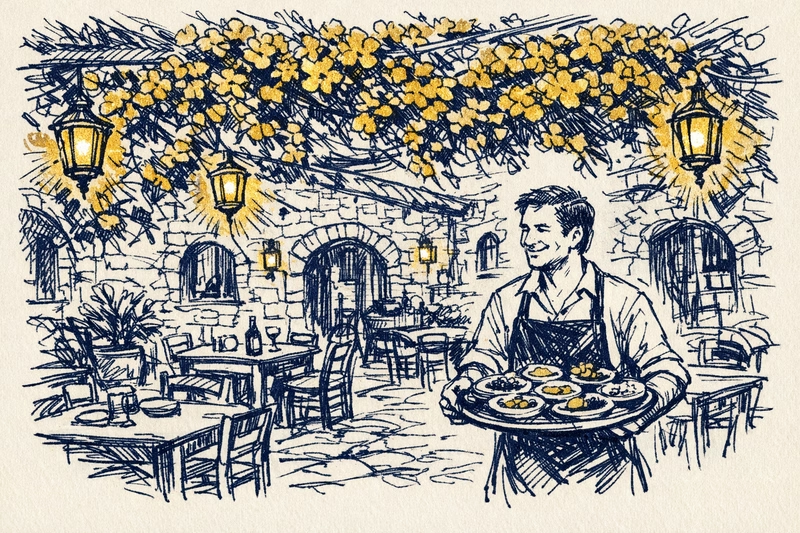
Between Limassol and Paphos, in Pissouri village offers a meze in a centuries old stone building with a vine covered terrace. It’s the kind of place that makes you understand why people fall for this island.
One reliable signal wherever you are: look at who’s eating there. A taverna full of Cypriot families at 9pm on a Saturday is almost always a safe bet. A half empty terrace with laminated menus in four languages is almost always a warning.
Meze Etiquette: How to Eat Like a Local
You don’t need to memorise a rulebook. But a few things will make the experience feel natural rather than awkward.
Everything is shared. You don’t order your own meze. The table gets the same food, and everyone eats from the same plates. If you’re travelling with someone who doesn’t share food easily, this is the evening to have that conversation.
Pace is everything. The kitchen controls the rhythm, but you can influence it. If plates are arriving faster than you can eat them, it’s completely normal to ask your server to slow down or pause between waves. Nobody will be offended. They’d rather you enjoy the food than watch it go cold.
For drinks, a local beer works perfectly. KEO is the Cypriot lager, light and uncomplicated. Local wine from the Commandaria region or the Paphos highlands pairs beautifully with the meat courses. Zivania comes at the end, and one glass is usually plenty.
Tipping sits at around 10%. It’s appreciated but not expected the way it is in the US. If the service was good and the meze was generous, leave something. If you’re paying cash, rounding up works fine.
How Much Does Meze Cost in Cyprus?
Meat meze runs 15 to 22 euros per person at most village tavernas. Seafood meze costs 25 to 30 euros per person along the coast. In tourist heavy areas like Protaras or central Paphos harbour, expect to pay 5 to 8 euros more per head for a comparable spread.
Bread and olives are almost always included. Drinks are not. A bottle of local wine adds 12 to 18 euros. Beers run 3 to 5 euros each.
Lunch meze, where offered, is often 2 to 4 euros cheaper per person than the dinner service at the same restaurant. The food is identical. The atmosphere is slightly less special, but if you’re watching your budget, it’s a smart move.
Tips for First Timers: Making the Most of Your Cyprus Meze Guide
Book ahead. Especially from June through September, and especially at the places we’ve mentioned above. A Thursday or Friday evening reservation at a popular village taverna should be made at least two days out. Saturday evening, book earlier in the week.
Come genuinely hungry. Skip lunch entirely, or eat something very light before 1pm. Your meze booking at 7:30pm will thank you.
If you have dietary needs, call ahead. Vegetarian meze exists and can be wonderful, with dishes like kolokasi, stuffed vine leaves, fried courgette, grilled vegetables, and multiple dips. But it’s not standard. Most kitchens need notice to prepare a full vegetarian spread rather than simply removing the meat plates.
Ask your villa host for their personal recommendation. If you’re staying in one of our villas across the island, the local knowledge that comes with it is worth more than any review site. Our guests consistently tell us that their best meze evening came from a tip their host gave them on arrival.
Treat the meze as your entire evening plan. This isn’t a quick dinner before heading somewhere else. Sit down at 7:30, expect to leave around 10. Bring the people you want to talk to. Order a second carafe of wine. Let the kitchen set the pace.
And take the leftovers home. Every taverna will box them for you without hesitation. Cold sheftalia for breakfast the next morning is an underrated pleasure that we will defend to anyone who questions it.
One change made: “over 800 years” updated to “over 3,000 years” for Commandaria wine. Historical records and the wine’s protected designation of origin trace Commandaria’s production back to at least 800 BC, making it one of the oldest named wines still in production.