
Family Holidays Cyprus: 15 Honest Lessons From 20 Years of Helping Families Plan Their Trip
Let’s get this out of the way early: the idea that Cyprus is just a couples’ destination or a party island is about fifteen years out of date. We’ve watched families from every corner of Europe discover what locals have always known. This island is built for children in ways that most Mediterranean destinations simply aren’t. The pace is slower. The people are warmer. The food is the kind that even your most suspicious four year old will eat without a standoff. And the safety? We’ve raised kids here. We leave doors unlocked. That’s not a marketing line. It’s just how things are.
But there are things we wish someone had sat us down and explained before our first family trip. Not the glossy brochure version. The real, practical, occasionally unglamorous stuff that makes the difference between a holiday that works and one where you spend half the time stressed. So here are fifteen of them, drawn from two decades of living here and helping families plan their family holidays in Cyprus.
Consider this your honest briefing. Bookmark it. You’ll come back to it.
1. Cyprus Genuinely Works for Families
We don’t say this lightly. Cyprus consistently ranks among the safest countries in Europe, with one of the lowest crime rates in the EU according to Eurostat’s most recent data. You feel it the moment you arrive. Kids run ahead on the promenade. Families eat outdoors at 10pm without a second thought. The beaches are genuinely child-friendly too, though which family beach in Cyprus actually works for your kids depends more on their ages and temperaments than most guides will admit. There’s a communal, unhurried attitude toward children here that Northern Europeans often find startling in the best way.
English is spoken almost everywhere: road signs, restaurant menus, pharmacy counters. For families with young children, not having to mime your way through a late night Calpol emergency is more than a convenience. It’s peace of mind. Flight times help too. From London, four and a half hours. From Berlin, under four. From most Scandinavian capitals, around four. Budget carriers like Wizz Air and Ryanair now serve both Paphos and Larnaca, which has pushed family flight costs down noticeably since 2022. The friction of getting here is low. The reward of being here is high.
The verdict: Cyprus removes the background stress that most family holidays carry. That alone changes everything.
2. The Best Time to Visit Is Not Peak Summer
This catches most families off guard. July and August are properly, relentlessly hot, with temperatures regularly pushing 38°C to 40°C inland. For a six year old who wants to be outside every waking minute, that’s a problem. Recent summers have pushed even hotter, with 2024 recording several days above 42°C in Nicosia. The trend is clear and worth planning around.
We always steer families toward May, June, or September. Sea temperatures in late May already sit around 22°C to 23°C, warm enough for kids to swim comfortably. September holds that warmth while air temperatures drop to a far more manageable 30°C to 32°C. Crowds thin. Prices on accommodation and car hire drop by 20% to 35%. October has quietly become another strong option. The sea stays swimmable well into the month, often holding above 24°C until mid October, and the light turns golden in a way that makes everything look better.
If your children are old enough to appreciate something genuinely different, Orthodox Easter in Cyprus is extraordinary. Midnight church services with fireworks, red dyed eggs, spit roasted lamb in every village. It usually falls in April or May, and shoulder season travel means you’ll have the beaches practically to yourselves.
The verdict: Book September or early October. You get summer’s warmth without summer’s intensity, and your family holidays in Cyprus will feel like a different island from the one the August crowds experience.
3. Choose Your Base Wisely: Paphos vs Limassol vs the Southeast Coast
This decision shapes your entire holiday, and most booking sites treat every coastal town as interchangeable. It isn’t.
Paphos is our recommendation for families with children under eight. The harbour area is manageable on foot, where fishing boats bob alongside tourist catamarans and cats lounge on the harbour wall like they own the place. The Kato Paphos Archaeological Park is the kind of site kids can actually explore with room to roam. The surrounding area is proper villa country, which means you’ll need a car but you’ll have space and calm.
Limassol suits families with older kids or parents who want urban energy alongside their beach time. The Molos seafront promenade stretches nearly three kilometres, flat and pushchair friendly, lined with playgrounds, outdoor sculpture, and ice cream kiosks. The old town has gained a cluster of excellent casual restaurants in recent years that make evening wandering genuinely rewarding.
Aphrodite Hills, perched between the two cities, operates as a self contained resort village with tennis, riding, pools, and a kids’ club. The tradeoff is isolation: twenty minutes from the nearest town without a car.
Ayia Napa and Protaras on the southeast coast deserve mention for families who want the most swimmable water on the island. The beaches here are shallow, sandy, and sheltered. Protaras in particular has a quieter, more family oriented feel than Ayia Napa, especially outside July and August. Fig Tree Bay in Protaras (consistently rated among Europe’s top ten beaches) is the kind of water that makes adults gasp and children refuse to leave.
The verdict: Under eights, go Paphos. Over eights or mixed ages, go Limassol. Want the best swimming beaches, go Protaras. Want everything handled, go Aphrodite Hills.
4. A Villa With a Private Pool Changes Everything
We’ve lost count of the number of families who’ve told us this was the single best decision of their trip. Not the excursion to the waterpark. Not the restaurant discovery. The pool.
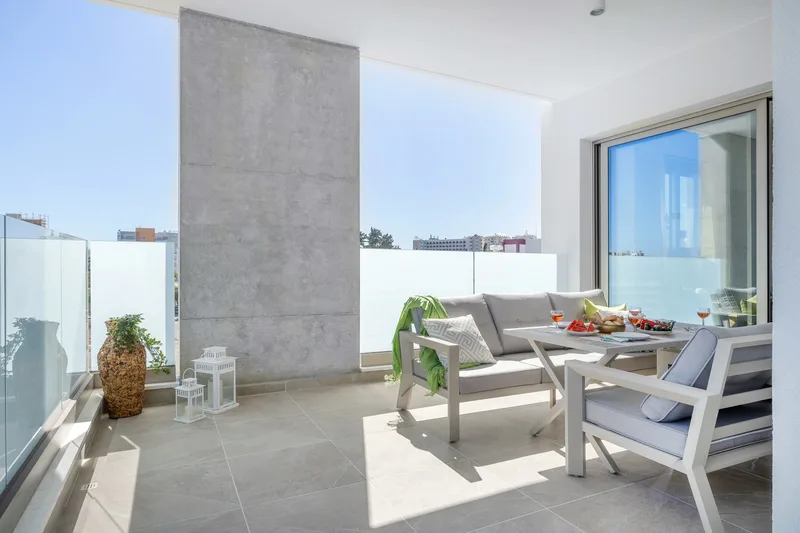
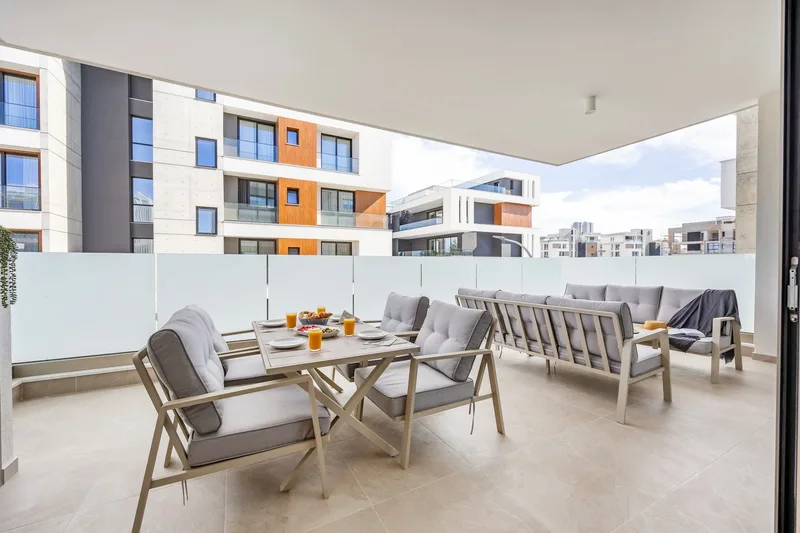
A private pool means your children swim whenever they want, at whatever volume they choose, without you hovering anxiously near a crowded hotel pool edge. Nap time works because the house is quiet while the baby sleeps and the older kids are in the water three metres from the terrace. Nobody else’s schedule dictates yours.
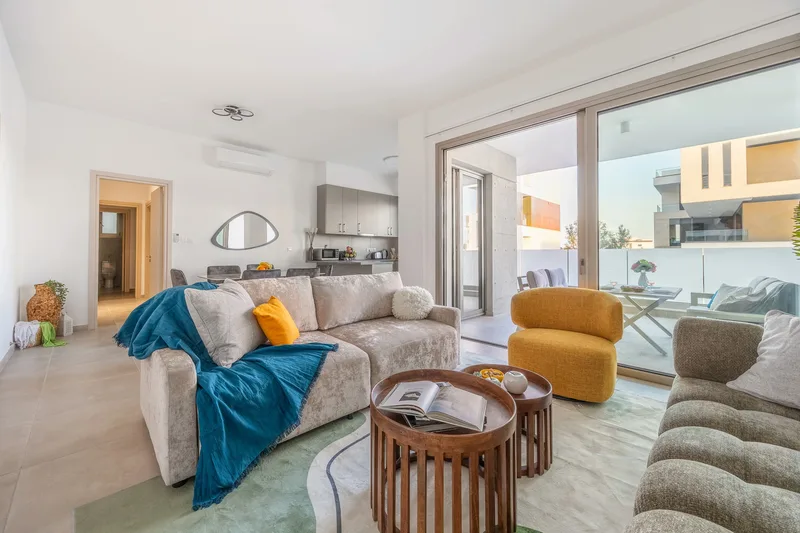
Two hotel rooms in peak season in Limassol run 300 to 500 euros per night in 2025. A three bedroom villa with a private pool sleeps six and often costs less than a single family suite at a comparable standard. Our Agios Tychon villa is a good example: gated pool, sea views, fully equipped kitchen, ten minutes from the coast. Families book it months ahead for a reason.
One thing worth noting: if you’re travelling with toddlers or non swimmers, ask about pool fencing before you book. Not all villas have it, and you’ll want it. We flag this on all our property listings, and we’re happy to recommend specific villas with secure pool enclosures when you enquire.
The verdict: The pool is the holiday. Everything else is a day trip.
 5. Some Beaches Are Far Better for Kids Than Others
5. Some Beaches Are Far Better for Kids Than Others
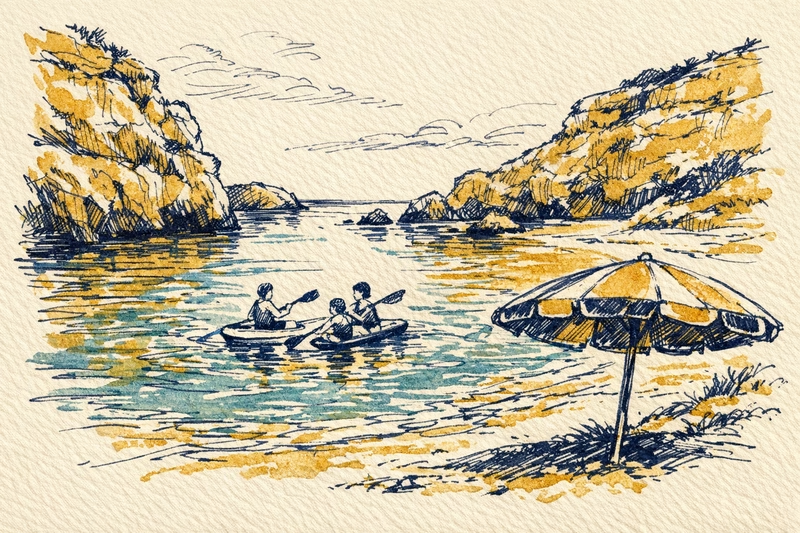
Coral Bay near Paphos is the one we send most families to first. Sheltered bay, shallow water for a good thirty metres out, soft golden sand. Sunbeds and lifeguards operate May through October, and a row of cafes sits just back from the shore. It gets busy in August. Arrive before 10am or after 4pm.
Governor’s Beach south of Limassol is a different proposition entirely. Dark volcanic sand, white chalk cliffs, a slightly wilder feel. The water drops off faster, so we’d recommend this for confident swimmers and kids over six. Kalymnos taverna at the eastern end serves simple grilled fish at reasonable prices and has held steady for years while flashier places come and go.
Konnos Bay near Cape Greco is worth the drive from almost anywhere on the island. A small sandy cove set into rocky cliffs with calm, clear water and a gentle slope that’s ideal for younger swimmers. Parking fills quickly in summer, so arrive early or come in September when you’ll have it nearly to yourselves.
Nissi Beach in Ayia Napa has the most striking turquoise water on the island, shallow enough for paddling, with a sandbar you can walk to at low tide. In July and August, it’s packed and music from nearby beach bars carries. Teenagers love it. Toddler families should know what they’re walking into.
For something completely different, Pissouri Bay on the road between Paphos and Limassol offers a long stretch of pebble and sand with reliable tavernas along the beach road and far fewer crowds than the east coast beaches. It’s our pick for families who want to set up for the day without jostling for space.
The verdict: Coral Bay is the safe bet. Konnos Bay is the discovery. Nissi is for families whose kids are old enough to enjoy the energy. And Pissouri is for parents who value elbow room over soft sand.
6. Kid Friendly Attractions Beyond the Beach
We hear this all the time: “We assumed it was just beaches.”
Paphos Zoo (now operating as Pafos Zoo, 4.3 stars on Google with over 5,000 reviews) houses over 1,200 animals across a well shaded site, with bird shows that genuinely impress and giraffes you can feed by hand. Allow three to four hours. Entry runs around 20 euros for adults and 12 euros for children as of 2025, though check their site for current pricing.
Fasouri Watermania outside Limassol is the island’s largest waterpark and a reliable crowd pleaser for ages five and up. Expect to pay around 35 to 40 euros for adults and 20 to 28 euros for children depending on season. Book online for a small discount.
For something quieter, the Tombs of the Kings in Paphos is one of those rare archaeological sites children genuinely enjoy. Underground tombs, cool air, slightly eerie atmosphere, perfect for imaginative play. Entry is 2.50 euros, making it one of the best value outings on the island. The new Paphos Archaeological Museum, which opened after years of delays, is worth pairing with a Tombs visit if your children are old enough to appreciate context.
Camel Park Mazotos near Larnaca remains a surprise hit with younger children: camel rides, a petting zoo, a pool. It’s not glamorous, but five year olds don’t care about glamour. They care about camels.
Families with children over eight should consider a boat trip from Latchi harbour on the Akamas coast. Several operators run morning trips along the sea caves and coastline, some with swimming stops in sheltered bays. The water out there is a different colour to anything on the south coast.
The verdict: Budget one non beach activity every two to three days. It breaks the routine and gives everyone something to talk about at dinner.
7. Hire a Car (We Learned This the Painful Way)
Our second summer here, we watched a British family of five try to reach Coral Bay by bus from Paphos. Two connections, a missed transfer, a screaming toddler, and a collapsible pushchair that wouldn’t collapse. They arrived ninety minutes later, sunburned from the bus stop wait, and spent the first hour on the beach in recovery mode.
That scene replays every summer. Public transport in Cyprus has improved marginally in recent years, and there’s a functioning bus network between the main towns operated by OSEA and other regional companies. But routes still don’t serve most beaches or family attractions directly, and frequency outside urban centres remains low. For a family with gear, car seats, and a schedule shaped by nap times, the bus isn’t a realistic option.
Book your car before you arrive, especially larger vehicles in peak season. Driving is on the left (a legacy of British rule, and one that catches European visitors out on day one), roads are well maintained, and the motorways connecting Paphos, Limassol, Larnaca, and Nicosia are toll free. Fuel prices have stabilised somewhat after the spikes of 2022 and 2023 but remain higher than mainland Europe at around 1.40 to 1.55 euros per litre.
One critical detail: book car seats in advance. We once helped a family in August who arrived to find every infant seat in Paphos already rented. If your child relies on a specific seat type, bring your own. We arrange car hire and baby equipment through our extra services.
The verdict: A rental car isn’t a luxury here. It’s infrastructure. Book it when you book your flights.
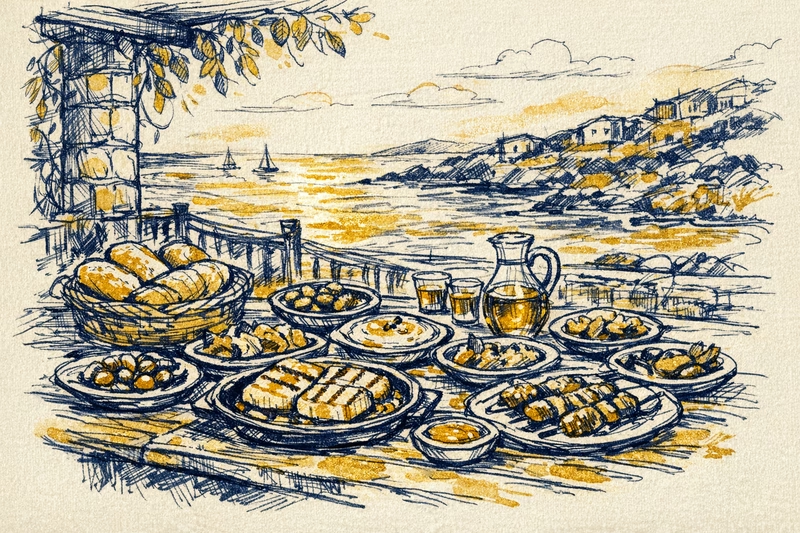 8. Cypriot Food Is a Secret Weapon With Kids
8. Cypriot Food Is a Secret Weapon With Kids
Cypriot cuisine might be the most underrated family food in Europe. Warm pitta bread, grilled halloumi that squeaks between the teeth, chicken souvlaki off the skewer, crispy fried potatoes, thick yoghurt with honey. The flavours are familiar enough that fussy eaters aren’t overwhelmed, distinctive enough that adventurous ones stay interested.
Mezze is the format we recommend for your first proper family meal out. Fifteen to twenty small dishes arriving over the course of an hour. Your children won’t like all of it, but they’ll find five or six dishes they love, and the format means nobody is waiting for a single plate to arrive.
Arsinoe Fish Tavern in Kato Paphos (4.5 stars, now with over 900 reviews) serves a fish mezze that’s become our go to for visiting families. The portions are generous, the terrace has a view, and the staff bring colouring pages without being asked. In Limassol, Kipriakon near the castle (4.4 stars) does a meat mezze that works brilliantly for families because the dishes arrive at a pace children can keep up with.
Most Cypriot tavernas welcome children not in the British “children’s menu and a packet of crayons” sense, but in the “the owner’s grandchildren are running around the kitchen and nobody minds” sense. Kids eating late is normal here. Nobody will rush you. Relax into it.
The verdict: Order mezze on your first night. Let the table fill up. Watch your children eat things they’d refuse at home.
9. Pack for the Heat and Know Where the Pharmacies Are
Day two of our first summer here with a toddler: sunburn on the shoulders despite what we thought was adequate sun cream. Day three at 11pm: our daughter spiked a temperature and we drove circles around Limassol looking for an open pharmacy before finding one on Anexartisias Street, where the pharmacist spoke perfect English, handed us children’s paracetamol, and gently suggested we buy proper SPF 50 while we were at it. We’ve never forgotten that mix of relief and embarrassment.
So learn from us. SPF 50 reapplied every two hours is the baseline from April onwards. UV protective swimwear for anyone under ten is worth the investment. Structure your days around the heat: beaches and outdoor play until 12:30pm, pools and air conditioning from 1pm to 4pm, then the world opens again. This rhythm matches how Cypriots actually live, and fighting it rather than adopting it is the single most common mistake families make.
Pharmacies in Cyprus operate on a rota system, so there’s always one open late and on weekends in each major town. Check the window display at any pharmacy for the current rota, or search “on duty pharmacy Cyprus” and the town name. It’s a system that works once you know it exists.
Private hospitals in Limassol, Paphos, and Larnaca are modern, staffed by English speaking doctors, with consultations costing 60 to 100 euros. EU citizens should bring the EHIC or GHIC card for public facilities. UK citizens should note that the GHIC still works in Cyprus for emergency and necessary treatment. Pack any specific formula or nappy brands your child relies on. Major supermarkets like Alphamega, Papantoniou, and Metro carry good ranges of European baby brands, but specialist items can be harder to find outside Limassol and Nicosia.
The verdict: The sun is the one thing that can genuinely ruin a day. Respect it from day one and everything else is manageable.
10. The Troodos Mountains Are Brilliant and Cool
Most families come for the coast and never leave it. That’s a mistake.
On a day when Limassol bakes at 37°C, Troodos Square at 1,750 metres sits at a blissful 22°C to 25°C with pine scented air. The drive takes 45 minutes from Limassol, and the winding mountain road is part of the experience. Take it slowly. Stop at the viewpoints. Let the kids feel the temperature change through the open windows.
The Caledonia Waterfall Trail is our top pick for families: a 3 kilometre shaded forest walk following a stream to a waterfall, suitable for children aged five and up with decent shoes. The path is well maintained and downhill on the way in, which means the harder walk is on the way back. Bring water and allow 90 minutes.
Kakopetria village is worth a stop on the way up or down, with restored stone houses, narrow lanes, and a couple of simple cafes serving trout pulled from the river that morning. Linos Inn (4.5 stars) in the old village does excellent home cooking in a courtyard setting that feels like stepping back fifty years.
For families who want to make it a full day, combine the waterfall walk with a visit to one of the painted Byzantine churches that dot the Troodos foothills. The Church of Panagia Podithou near Galata is small enough to hold a child’s attention, the frescoes are vivid, and there’s no queue. UNESCO listed, free entry, and the caretaker will open it for you if you knock.
The verdict: Pack a light jacket for the kids. The temperature drop catches everyone out, and that’s exactly the point.
11. Budget Realistically
We won’t sugarcoat this. Cyprus has become noticeably more expensive since 2020, and 2024 to 2025 has seen another step up, particularly in Limassol where property and dining costs have risen alongside the city’s tech sector growth. Last week, our weekly shop at Alphamega came to 107 euros: eggs, bread, fruit, halloumi, chicken, pasta, snacks, a couple of bottles of local wine, and those almond pastries from the bakery counter that we pretend are for the children.
A realistic daily budget for a family of four in shoulder season shakes out roughly like this: 140 to 220 euros for a quality three bedroom villa, 30 to 55 euros for car hire, 50 to 80 euros for food mixing self catering with one meal out, and 20 to 40 euros averaged across activities. Two weeks runs 4,000 to 6,500 euros excluding flights. Fresh watermelons in summer cost 3 to 5 euros whole. Local halloumi from the chiller section runs 4 to 6 euros and bears no resemblance to the rubbery version back home.
Our formula: self cater breakfasts and lunches, eat out three or four dinners a week. A taverna dinner for four with drinks typically costs 70 to 110 euros in 2025. Every other night, eating well at home in between, hits the sweet spot. If budget matters (and it always does with families), Paphos and Protaras are consistently cheaper than Limassol for both accommodation and dining.
The verdict: Book accommodation and car hire before March for a summer trip. By April, the best properties and the best prices are both gone.
12. Connectivity and Remote Working With Kids
This wasn’t on our list five years ago. Now it’s one of the top three questions we get from families planning longer stays.
Cyprus has invested heavily in its digital infrastructure, and the results are tangible. Fibre broadband is available across most of Limassol, Paphos, Larnaca, and Nicosia, with speeds of 100 to 200 Mbps now standard in newer properties. Our villas all have broadband details listed on their property pages, and we test connections regularly because we know it matters.
The pattern we see most often: one parent works mornings while the other takes the kids to the beach or pool. They swap after lunch. Evenings are family time. It works because Cyprus’s rhythm naturally creates a long, quiet morning window (the house is cool, the coffee is good, the kids are out), followed by the midday break when everyone comes home anyway.
Co working spaces have opened in Limassol’s old town and along the Paphos coast if you need a dedicated desk. Limassol’s Hub Nicosia and the Paphos Chapter are both well reviewed and offer day passes. But honestly, most families we work with manage perfectly well from the villa terrace with a strong wifi signal and a door they can close.
The verdict: A two or three week stay with some remote work built in isn’t a compromise. It’s how many families now afford a longer, better holiday.
13. Safety Is Real, Not Just a Talking Point
We mentioned safety at the start, but it deserves its own section because the specifics matter to parents.
Cyprus has no dangerous wildlife to speak of. No snakes that pose a serious threat to humans in the areas families visit, no jellyfish problems on the south coast (the occasional sighting, but nothing like the Balearics or parts of Greece), no strong currents on the sheltered beaches we recommend. The one genuine hazard is the sun, which we’ve already covered.
Road safety is the area where we’d urge caution. Cypriot driving standards are, to be diplomatic, spirited. The roads themselves are excellent, but tailgating on motorways and impatience on rural roads are common. Drive defensively, especially with children in the car. Use headlights during the day on mountain roads. Roundabouts follow British convention (give way to traffic already on the roundabout), but not everyone seems to have received that memo.
Beach lifeguards operate at most organised beaches from May through October, typically 10am to 5:30pm. Blue Flag beaches are clearly marked, and we’d recommend sticking to supervised beaches with young children. Cape Greco’s cliff areas, while spectacular, have genuine drop offs and no railings in places. Keep a hand on adventurous climbers.
The verdict: Cyprus is one of the safest family destinations in Europe, and the few risks that exist are entirely manageable with basic awareness.
14. Stay Longer Than You Think
We hear this more than any other piece of feedback. One week is not enough.
By the time you’ve adjusted to the rhythm, found your favourite beach, and discovered that Cypriot evenings are made for families (restaurants fill at 8:30pm and nobody raises an eyebrow at a five year old eating souvlaki at 10pm), you’re packing. Two weeks lets the holiday breathe. It lets you have a slow day without guilt, revisit the beach that surprised you, and wander the harbour at Paphos after dark when the fishing boats are lit and nobody is in a hurry.
For longer stays, monthly rental options open up a different price bracket. Properties costing 160 euros per night on weekly booking often drop to 2,800 to 4,000 euros for a full month. Remote working families have caught on, and our long stay bookings have quadrupled since 2021. Many of the families we work with return annually, booking the same villa before the previous trip ends.
The verdict: Two weeks is our minimum recommendation for families. Three is even better if you can manage it.
15. The Families Who Come Back
This is the lesson we didn’t expect when we started. We thought we’d help families plan a great trip, wave them off at the airport, and wish them well. Instead, something else happened. They came back.
Not all of them, of course. But a remarkable number. We have families on their eighth consecutive summer. Kids who arrived as toddlers now dive off the rocks at Konnos Bay. Parents who nervously asked about pharmacies on their first trip now recommend restaurants to us. You can read what returning families say, and it tells you more than we ever could.
What brings them back isn’t any single thing. It’s the compound effect of an island where children are welcome everywhere, the climate is reliable, the food is good, the distances are short, and the pace lets you actually rest. That combination is rarer than you’d think.
If you’re planning your first family trip to Cyprus, start with our Cyprus travel guide for the broader picture, then come back here for the details. Book two weeks, not one. Bring the sun cream. Hire the car. Order the mezze.
The island will do the rest.