Larnaca Cyprus Guide: Flamingos, Forts, and the City Everyone Drives Past
The air smells different at Larnaca’s Salt Lake in November. There’s a mineral sharpness to it, something ancient and brackish, and then you hear them before you see them. Hundreds of flamingos, pink and improbable against the grey water, standing in the shallows like they’ve been there for centuries. Which, in a sense, they have. We stood on the western path one late afternoon watching the light turn amber over Hala Sultan Tekke, and a couple from Vienna asked us if this was really the same city with the airport. It is. That’s the whole paradox of Larnaca: the island’s most functional city is also, quietly, one of its most rewarding.
Why Larnaca Deserves More Credit Than It Gets
Most visitors treat Larnaca as a corridor. Land at the airport, collect the hire car, drive to Limassol or Paphos. We understand the impulse. Both cities market themselves harder, and the coastal resorts to the east pull beach seekers with bigger promises. But Larnaca has something neither of those places can match: density of experience in a compact, walkable, genuinely lived in city that hasn’t been reshaped for tourists.
History, nature, beach, food, and a real neighbourhood rhythm all sit within a 20 minute walk of each other. That combination is rare anywhere in the Mediterranean, and it costs significantly less here than in Cyprus’s flashier cities. A seafront apartment in Larnaca rents for roughly 30% to 40% below a comparable Limassol property in peak season. Restaurant bills follow a similar pattern. And the crowds? Manageable even in August.
We’re not arguing that Larnaca replaces a week in the Troodos foothills or a beach holiday in Protaras. We’re saying it deserves three or four nights on its own terms, and that anyone using this Larnaca Cyprus guide as a starting point will quickly see why. The island has more layers than most first timers realise. Larnaca is proof of that.
The City and the Lake That Defines It
We remember the first time we cycled the full loop around Larnaca Salt Lake and realised, somewhere near the southern shore, that what we’d always thought of as one lake is actually four connected basins stretching inland behind Larnaca International Airport. The water level was low that October morning, and you could trace the channels linking each section, shallow ribbons of silver between wider pools. A heron stood motionless at the edge of the second basin. We stopped pedalling and watched it for a while. Nobody else was around.

That loop takes about an hour on foot, slightly less by bike, and we’ve done it dozens of times now. The mood shifts every visit. In November and December, the winter rain fills the basins and the flamingos arrive. Peak counts have exceeded 12,000 birds in a single season. By midsummer, the water retreats to a white crust of salt and the landscape turns lunar and strange. Both versions are worth seeing.
Beyond the lake, Larnaca’s layout is the kind you absorb without a map. The seafront promenade runs north to south, the old town climbs gently inland behind it, and nearly everything you’d want falls within that grid. We stopped using our car within the city after the first week. Just walk.
 Top Things to See and Do in Larnaca
Top Things to See and Do in Larnaca
Start at Finikoudes Promenade, the palm lined seafront that defines Larnaca’s public face. We’ll be honest: the beach beside it is narrow and urban, and during the day it doesn’t hold a candle to what you’ll find further down the coast. But come back around seven on a summer evening, when the sun drops low and the cafe tables fill and the promenade hums with people who are in no rush whatsoever, and Finikoudes has an energy that feels genuinely Mediterranean rather than manufactured. The promenade runs for about 600 metres, from the marina at the north end to the fort at the south.
Larnaca Medieval Fort anchors that southern end. We ducked in one March afternoon expecting to spend ten minutes and ended up lingering for most of an hour, working through two floors of Ottoman and medieval artefacts before climbing to the rooftop. That roof is the real reward. You get a clean sightline north along the waterfront, south toward Mackenzie, and inland over the jumbled rooftops of the old quarter. Entry is 2.50 euros. It might be the best value viewpoint on the island.
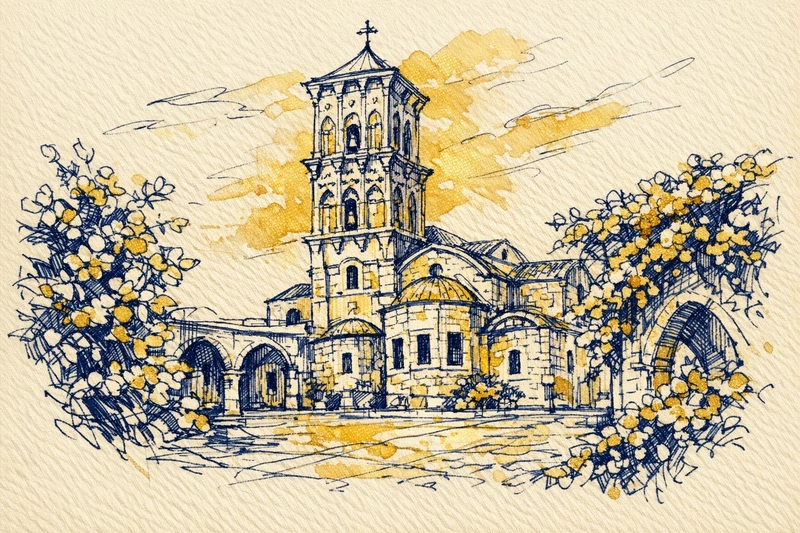
Directly behind the fort, a narrow street leads to the Church of Saint Lazarus.
Built in the 9th century over the tomb of Lazarus (yes, that Lazarus, the one raised from the dead), the church is one of the finest surviving examples of Byzantine architecture in Cyprus. We first visited on a quiet weekday morning. The interior was dim and incense heavy, the iconostasis ornate, and when we descended to the crypt below the altar to see the open stone sarcophagus, the temperature dropped and the sound of the street vanished completely. We’ve taken sceptical friends here since and watched them go quiet.
From Saint Lazarus, a 15 minute walk southwest brings you to the shore of the Salt Lake and Hala Sultan Tekke. We go back to this mosque every few months, often in the late afternoon when the light is low and the lake’s surface turns to glass. Tall palms, still water, the modest dome reflected perfectly. It’s built around the tomb of Umm Haram, an early companion of the Prophet, and considered one of the most important Muslim shrines in the region. Non-Muslim visitors are welcome. Remove your shoes, cover your shoulders, and spend ten minutes in the cool interior.
For something entirely different, head 2km north of the city centre some evening after dark. Kamares Aqueduct is a row of 33 stone arches that carried water into Larnaca from 1747 until the 1930s. We stumbled on it by accident our first winter here, driving back from dinner, and pulled over because the floodlit arches looked almost theatrical against the night sky. No entrance fee, no opening hours. Most visitors drive past without stopping, which is their loss.
By daylight it’s handsome. By floodlight it’s extraordinary.
For swimming, skip the Finikoudes beach and head south to Mackenzie Beach, a broader stretch of sand between the old town and the airport. The water is clean, calm through summer, and carries a Blue Flag rating. Sunbeds and umbrellas run about 5 euros per set. Planes pass overhead on approach to the runway, which we’ll admit we love. There’s a strange, cinematic quality to watching a 737 descend while you’re floating on your back in warm water. The beach bars at the southern end are lively without being overwhelming.
 Where to Eat and Drink in Larnaca
Where to Eat and Drink in Larnaca
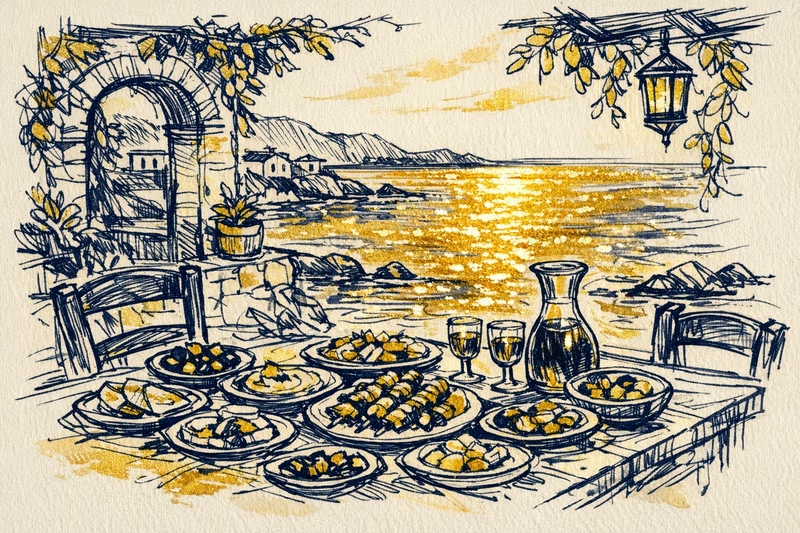
We eat best in Larnaca when we leave the waterfront and walk into the Skala district, the old Turkish quarter behind the fort. The streets are narrow and many of the buildings are Ottoman era, stone walled and low ceilinged. This is where the tavernas with handwritten menus and mismatched chairs tend to cluster, and the food follows suit. Grilled octopus, slow cooked lamb, halloumi straight from the grill with a squeeze of lemon. Prices for a full mezze for two, including wine, typically land between 40 and 55 euros.
Art Cafe 1900 is a reliable favourite for something slightly more polished. Set in a restored heritage building on Stasinou Street, the interior is all exposed stone and vintage furniture, and the menu covers Cypriot classics alongside a few European touches. We’ve had an excellent slow roast pork belly here, and the loukoumades (Cypriot honey doughnuts) are worth ordering even if you’re full. Ratings hover around 4.5 stars across review platforms, and reservations are wise on Friday and Saturday evenings.

For coffee and people watching, the Finikoudes waterfront cafes serve their purpose. Don’t expect exceptional coffee. Do expect a front row seat to Larnaca’s daily theatre: families, joggers, cats, elderly men playing tavli, the occasional street musician. It’s not performative. It’s just a city being itself.
Nightlife centres loosely around Larnaca Marina and the Mackenzie Beach strip. The scene is low key compared to Ayia Napa or Limassol’s Germasogeia area. Cocktail bars, a few live music spots, no mega clubs. For most visitors, this is a relief rather than a limitation. We’ve had some of our best Larnaca evenings finishing dinner late in the Skala quarter and walking the waterfront back to our apartment, the city quiet and warm.
A note on zivania, the local spirit distilled from grape pomace. It’s served ice cold, usually complimentary at the end of a meal, and it is significantly stronger than it tastes. One small glass is a tradition. Two is a decision. Three is a story you’ll be telling for years. Approach with respect.
Day Trips and Excursions from Larnaca
Larnaca’s central position on the southern coast makes it one of the best bases for exploring the eastern half of Cyprus. Any comprehensive Larnaca Cyprus guide needs to cover these four day trips, and we’ve done each one multiple times.
Cape Greco and the sea caves sit about 45 minutes east by car, past Ayia Napa. We first went on a Tuesday in early May, arrived at half seven in the morning, and had the sea caves entirely to ourselves for nearly an hour. The coastline is volcanic and sculptural: natural rock arches, water visibility that regularly exceeds 30 metres, and a network of short walking trails connecting the key viewpoints. By ten o’clock the tour minibuses had arrived and the paths were busy. Go early. It makes all the difference.
Thirty minutes west along the motorway, Choirokoitia is the day trip that stays with you longest. This Neolithic settlement dates to approximately 7000 BC. We walked through the reconstructed round houses on a grey January afternoon, and the scale of it hit us slowly: people lived here, continuously, for thousands of years before the Pyramids were built. The site is well preserved, modestly interpreted, and almost always empty of visitors. Entry is 2.50 euros.

We find it quietly moving, and we’ve never met another tourist there.
Lefkara village sits in the foothills of the Troodos, about 40 minutes from Larnaca. We go for the lunch as much as the lace. The main street has a few too many souvenir shops, we won’t pretend otherwise, but walk two blocks in any direction and you’re in a genuine working village with cats sleeping on doorsteps and grandmothers watching from balconies. On our last visit we ate lamb kleftiko on the upper street at a taverna with four tables and no menu in English. The owner brought us what he had. It was superb and cost 12 euros a head.

Nicosia is under an hour north by motorway, and it’s a completely different experience from anything else on the island. We spent a full day walking the old town inside the Venetian walls: the Cyprus Museum in the morning, lunch in the Laiki Geitonia quarter, then a long afternoon wandering streets where the Green Line and its buffer zone appear suddenly at the end of otherwise ordinary roads. It’s fascinating and sobering. Any Larnaca guide worth reading should insist you make this trip at least once.

Best Time to Visit Larnaca
April, May, September, and October are our preferred months. Daytime temperatures sit between 24 and 30 degrees, the sea is warm enough for swimming from May onwards, and visitor numbers are noticeably lower than the July to August peak. Accommodation prices reflect this. Expect to save 25% to 35% on the same property compared to high summer bookings.
Winter visits have their own logic. December through February brings mild, sunny days (15 to 18 degrees is typical), and the flamingos transform the Salt Lake into one of the best birdwatching sites in the eastern Mediterranean. If winter sun in Cyprus appeals to you, Larnaca is arguably the strongest single city for it because the lake, the churches, the food, and the walking all work better in cool weather than in 38 degree August heat.
Summer is beach season, straightforwardly. It’s hot, it’s busy around the airport corridor, and the Salt Lake dries to a white crust. Mackenzie Beach is at its liveliest. Evenings are long and warm. If you’re primarily here to swim and eat, it works. Just don’t plan a long afternoon walk through the Skala quarter in July.
Getting Around and What to Know Before You Go
We’ve taken the Limassol bus more times than we can count. It’s about an hour, 4 euros, and reliably uneventful. The Nicosia bus is similar: 45 minutes to an hour, same price, same dependable boredom. Paphos takes roughly 2 hours with a change in Limassol. One thing we learned the hard way: last services run around 6pm to 7pm depending on the route. Miss that window and you’re looking at a taxi.
A car rental is worth it for day trips but unnecessary within the city itself. We kept ours parked for four straight days on our last visit and never once wished we’d driven somewhere.
Currency is the euro. Tap water is safe throughout Cyprus, though we’ll admit we drink bottled out of habit. English is spoken widely in Larnaca, more so than in many parts of southern Europe. Google Maps is reliable and up to date for navigation, parking, and opening hours.
When visiting the Church of Saint Lazarus or Hala Sultan Tekke, cover your shoulders and knees. Both sites are active places of worship, not just tourist attractions, and respectful dress is expected. Photography is usually permitted inside but flash is not.
One practical detail that catches people out: Larnaca’s parking near the seafront is metered and enforced. We learned this the expensive way early on. The lots behind Finikoudes fill by mid-morning in summer. Now we park near the Kamares Aqueduct or along the Mackenzie strip and walk in. It saves both money and frustration.
Where to Stay in Larnaca: Choosing the Right Base
Two neighbourhoods make the most sense for visitors. Finikoudes puts you on the seafront with immediate walking access to the promenade, the fort, and the main cafe strip. It’s the more polished, tourist facing area. The Skala district is quieter, more atmospheric, and closer to Saint Lazarus and the best tavernas. Both sit within five minutes’ walk of each other, so either works.
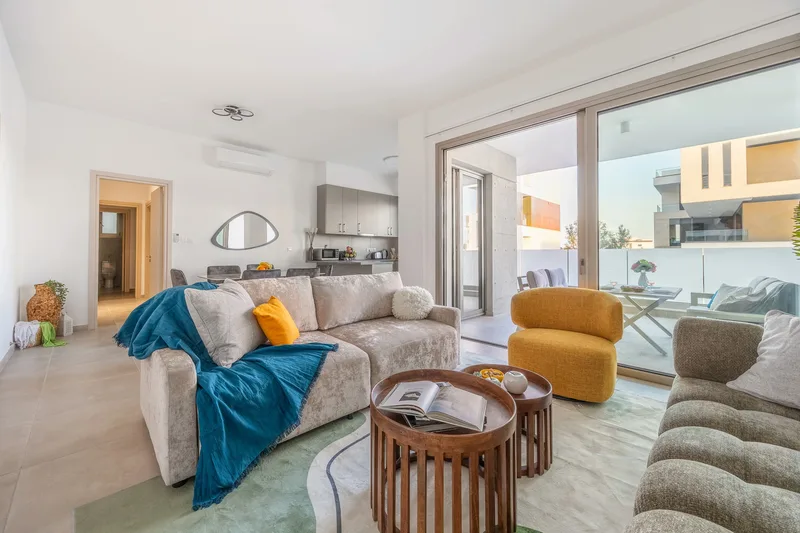
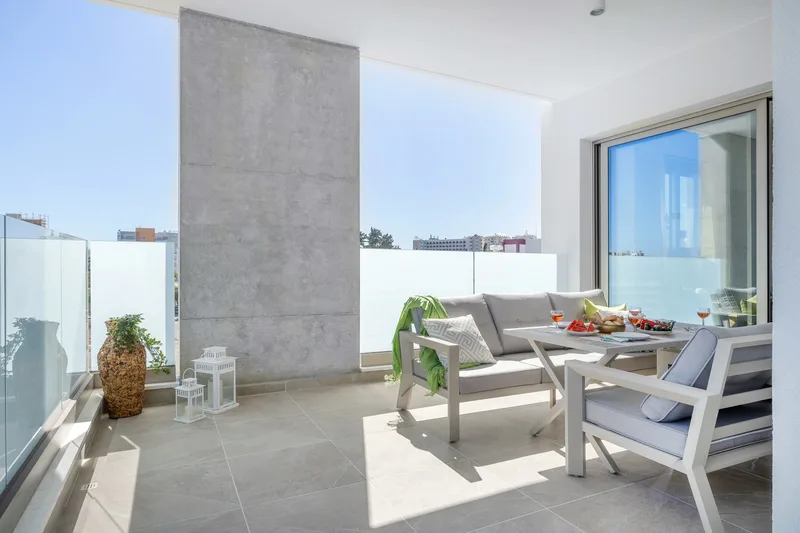
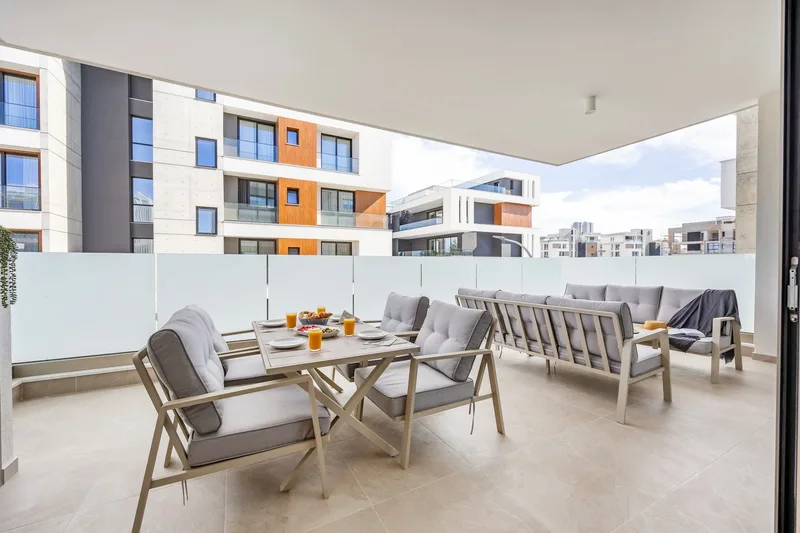
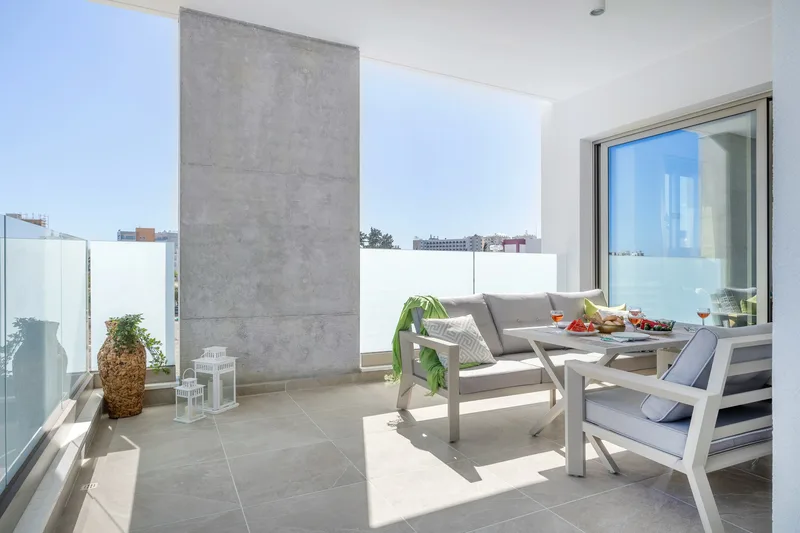
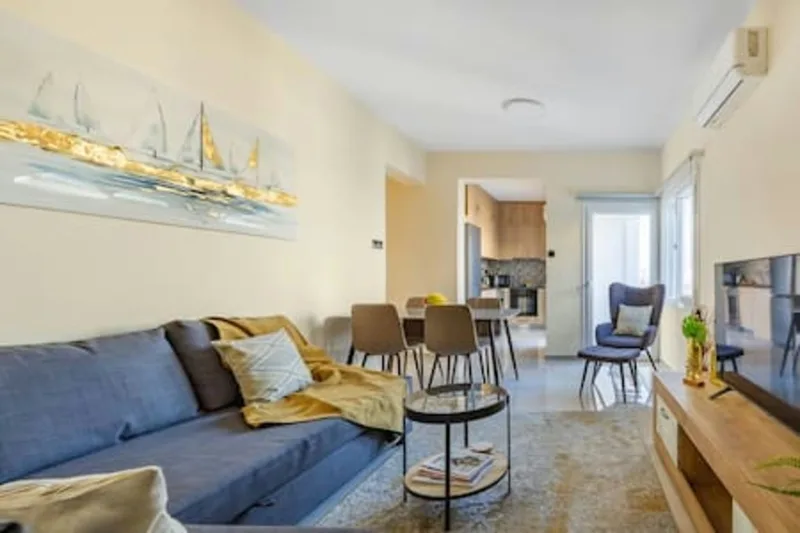
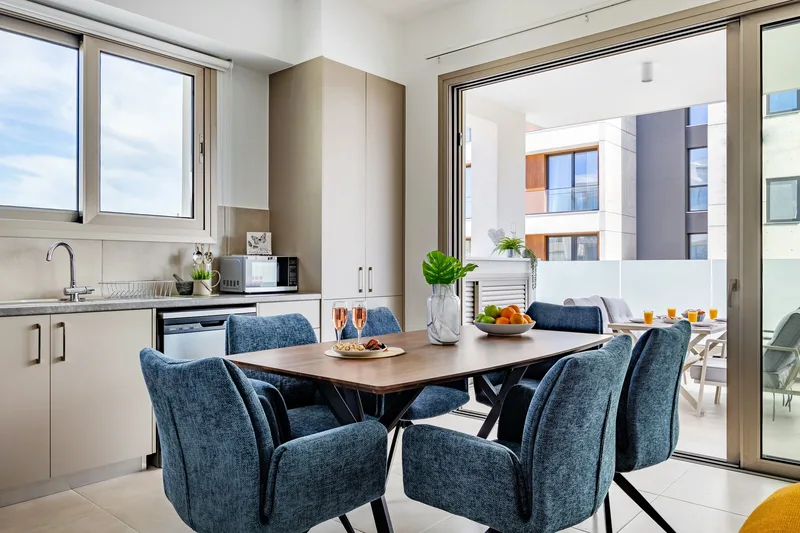
We consistently recommend holiday rentals over hotels in Larnaca. The hotel stock here skews older and mid-range, with a few honourable exceptions. A well chosen apartment or villa gives you space, a kitchen for breakfasts and snacks, and the flexibility to live at your own pace. Browse holiday villas across Cyprus for a sense of what’s available, or explore luxury options if you want something with a private pool and sea views.
Larnaca works best for couples and solo travellers who want a genuine city experience rather than a resort bubble. The compact layout, the evening atmosphere, the ease of walking everywhere: it rewards people who like to discover a place on foot at their own speed. Families do well here too, particularly with younger children, because the calm beaches and short distances mean less time in the car and more time actually on holiday. For those considering a longer stay in Cyprus, Larnaca’s lower cost of living and proximity to the airport make it the most practical base on the island that doesn’t sacrifice quality of life. That’s something every Larnaca Cyprus guide should tell you upfront, and now you know.
If you’re arriving on a late flight or departing early, staying near Mackenzie Beach puts you within a ten minute taxi ride of the terminal. It’s the kind of small logistical detail that transforms a last evening from stressful to pleasant.
For the broader picture on planning your trip, our Cyprus travel guide covers the island’s regions, seasons, and logistics in detail. Larnaca deserves its own chapter in that story. We’ve given you ours.