Omodos Village Wine: Everything to Taste, See, and Do in the Troodos Foothills
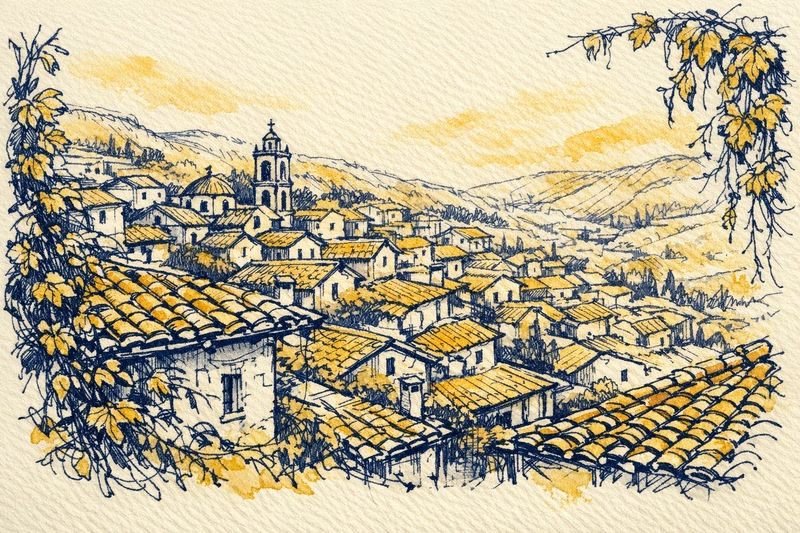
The afternoon we drove up to Omodos for the first time, we nearly missed the turn. The GPS said we’d arrived, but the road just kept climbing through terraced vineyards, the vines heavy with late September fruit, the air ten degrees cooler than the coast we’d left behind forty minutes earlier. Then the tarmac narrowed to a single lane, a church bell sounded once from somewhere we couldn’t see, and suddenly the village opened up: stone walls, terracotta roofs tumbling down the hillside, and the unmistakable smell of fermenting grapes carried on a breeze that felt like it had been doing this for centuries.
We parked under a mulberry tree, walked into the central square, and a man we’d never met handed us a small glass of something dark and sweet. “From my garden,” he said. That was twelve years ago. We’ve been back more times than we can count, and Omodos still does this: it catches you off guard, pulls you in, and makes you wonder why you ever bother with beach bars - and if the village leaves you hungry for more of the island’s interior, the other inland villages worth escaping to each carry their own version of this feeling, and the Troodos Mountains in summer reward that same instinct to head uphill and away from the crowds, though if you do find yourself back on the coast, Cyprus has hidden beaches that are well worth the detour, and if you’re based in Paphos, Paphos in 72 Hours: The Itinerary We Give to Friends makes the drive up to Omodos an easy and rewarding half-day addition, and if you’re staying somewhere like BK02 near Aphrodite Hills with a pool and sea views you’ll find the village is closer than you’d expect, and if you’re after something more active, the Akamas Peninsula hike trails offer a completely different side of the island.
 Why Omodos Belongs on Every Cyprus Wine Itinerary
Why Omodos Belongs on Every Cyprus Wine Itinerary
sits at roughly 800 metres elevation in the southern foothills of the , tucked into a valley where the Krasochoria, the historic wine villages of the Limassol district, have been producing wine for longer than most European nations have existed. Omodos village wine isn’t a single style or a single flavour. It’s an entire culture built around the grape, and if you have even a passing interest in wine, food, or mountain villages that reach deep into the Troodos range - where summer temperatures stay around 24°C among pine forests and painted churches - this corner of Cyprus will hold you longer than you planned. into the island’s interior](/en/blog/7-inland-villages-in-cyprus-that-will-make-you-forget-the-beach-entirely), Omodos belongs near the top of your list - though it hasn’t been hollowed out by tourism, this is the stop you need to prioritise - and it pairs beautifully with a wider Cyprus wine villages Sunday drive through Omodos, Lania and the Troodos foothills if you want to take in more of the region in a single day.
From Limassol, the drive takes about 45 minutes. From Paphos, allow just over an hour. Either way, the route climbs through some of the most beautiful agricultural landscape on the island: vineyards laid out in neat rows across rust-coloured slopes, almond trees, carob trees, and the occasional goat standing on something it shouldn’t be standing on. For anyone planning their first trip, our Cyprus travel guide covers the broader logistics, but Omodos deserves its own chapter.
What sets this village apart from the dozen other wine villages in the Krasochoria isn’t any single thing. It’s the accumulation: a monastery that’s been here since the fourth century, a central square that functions as a living room for the entire community, wineries you can walk between in five minutes, and a pace of life that genuinely hasn’t been engineered for visitors. People live here. They grow grapes here. They argue about football here. You’re welcome to join, but nobody’s performing for you.
How Omodos Became a Wine Village (and Never Stopped)
We first heard the full story from a winemaker named Yiannis, standing in the monastery courtyard next to a stone wine press that looked older than anything we’d ever touched. He put his hand flat on the basin and said, “Five thousand years, maybe more. Nobody really knows when it started here.” Archaeological evidence from the broader Limassol wine region backs him up. Grape cultivation in these hills stretches back millennia, and the specific microclimate around Omodos, warm days, cool nights, well-drained limestone soils, has kept it going without interruption.
The village’s identity is inseparable from the , the Monastery of the Holy Cross, which has occupied the centre of Omodos since at least the fourth century AD. Monks here didn’t just pray. They maintained vineyards, perfected winemaking techniques, and kept the tradition alive through Ottoman rule, British colonial administration, and everything in between. Running your fingers along the grooves of that old press Yiannis showed us tells you everything about what mattered most to the people who built this place.
Standing in exactly that spot one October afternoon, squinting at the light coming through the monastery arches, someone first explained the Commandaria connection to us. Omodos sits within the designated Commandaria wine region, the zone that produces what’s often called the world’s oldest named wine. Commandaria is a sweet amber dessert wine made from sun-dried Xynisteri and Mavro grapes, produced in these hills since the Crusader period. Richard the Lionheart reportedly tasted it during the Third Crusade and declared it “the wine of kings and the king of wines.” We can’t verify Richard’s exact words, but we can confirm the wine is extraordinary. Cyprus’s winemaking heritage is one of many reasons the island rewards deeper exploration beyond the beach resorts.
After 1974, when the division of the island disrupted rural economies across the south, Omodos went quiet. Young people left for Limassol and Nicosia. Vineyards were neglected. An older woman we know in the village once told us that in the 1980s you could walk through the square at midday and not see a soul. Over the past three decades, though, a slow revival has taken hold. Families have returned. New wineries have opened alongside the old cooperative. Omodos today feels like a village that knows what it nearly lost and has decided, firmly, to hold onto it.
 The Central Square: Where Every Visit Begins
The Central Square: Where Every Visit Begins
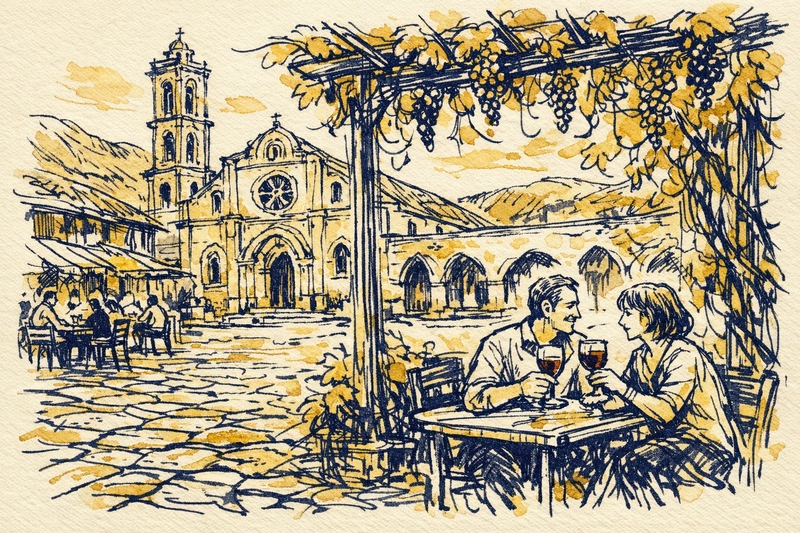
Every road in Omodos eventually leads you to the plateia, the central square, and it’s one of the most genuinely atmospheric public spaces on the island. We’re not being sentimental. We’ve sat in this square in January rain and August heat, and it works every time.
Cobblestones underfoot are uneven and ancient. Along the northern edge, the facade dominates, its arched entrance cool and dark even at midday. A massive old vine, thick as a man’s thigh, crawls across a pergola that shades half the square. Underneath it, tables from two or three competing kafeneions overlap in a way that makes it unclear whose territory you’re sitting in. Nobody minds.
Morning is best if you want the square mostly to yourself. By 9am on a weekday in spring or autumn, you might share it with three old men drinking Cyprus coffee and a cat with no particular agenda. Weekend afternoons from May to October bring tour groups, usually arriving by coach around 11am and leaving by 2pm. Our advice: arrive by 10am or come after 3pm, when the square empties again and the late afternoon light turns the monastery stone from grey to gold.
Order a Cyprus coffee (medium sweet, if you’re unsure) and a plate of loukoumi from whichever kafeneion has the friendliest wave. Sit for at least thirty minutes. This isn’t a place to photograph and leave. Only when you stay long enough for the village to forget you’re a visitor does the square reveal its real character.
Omodos Village Wine: What to Taste and Where
Our education in Omodos grape varieties happened one bottle at a time, usually with a winemaker leaning on a barrel and correcting our pronunciation.
Xynisteri came first. A local producer poured us a glass from a steel tank on a warm May afternoon and said, “This is Cyprus in a glass. Drink it before you drink anything else.” He was right. This indigenous white grape produces wines that range from crisp and citrusy to richer, oak-aged versions with notes of honey and stone fruit. It’s the island’s most widely planted white variety, and at Omodos elevation, the cooler nights give it an acidity that the coastal vineyards can’t match.
Mavro we learned about the old-fashioned way: a retired farmer poured us an unlabelled red from a plastic jug at a village lunch, and when we asked what it was, he looked at us like we’d asked what colour the sky was. Mavro is the workhorse grape, grown here for millennia, used for everything from table wine to Commandaria. Older winemakers still swear by it. Younger producers tend to blend it or reach for something more fashionable.
That something more fashionable is Maratheftiko, and it changed what we thought Cypriot wine could be. We first tasted a serious one at , a small, family-run estate just outside the village. Deep colour. Dark fruit layered with something spicy and almost savoury. Structured enough to age. This is the grape that nearly disappeared entirely because it requires a pollinator variety planted nearby and yields are stubbornly low. But the wines it produces have been winning medals at the Decanter World Wine Awards in recent years, and for good reason. Tastings at Dafermou are informal and personal. Expect to pay around 10 to 15 euros for a guided session with four or five wines, often accompanied by local cheese and dried fruits. Call ahead, especially in winter.
In the village itself, the offers a different kind of immersion. It’s modest in scale but genuinely informative, walking you through traditional winemaking tools, old presses, and the history of the Commandaria trade routes. Allow 30 to 45 minutes.
Historically, large cooperatives in Limassol processed much of the region’s grape harvest, but the trend now is firmly toward small, independent producers bottling their own wine. More diversity, more personality, and more opportunities to taste something you won’t find in a supermarket back home.
Our buying tips: pick up a bottle of Maratheftiko from any local producer you’ve tasted and enjoyed. Expect to pay 12 to 25 euros per bottle. Grab a small bottle of Commandaria in the traditional 50cl format. And if you see a winery offering Xynisteri aged in clay amphorae, buy it without hesitating. These experimental styles are where Cypriot wine is heading, and they travel well.
Beyond the Glass: What Else Omodos Offers
Wander the back streets. Seriously, that’s the main activity, and it’s better than it sounds. Alleys behind the square are narrow enough to touch both walls, lined with stone houses that have been here for centuries, their doorways draped in jasmine and bougainvillea. Several traditional lace workshops operate from these houses, producing intricate embroidery in a style similar to the famous lefkaritika lace of Lefkara. Watch the women work if the doors are open. Buy a small piece if you want something genuinely handmade. Expect prices from 15 euros for a doily to over 200 for larger tablecloths.
Ceramics shops dot the lanes too, most selling locally made pieces alongside the inevitable imported souvenirs. Look for the studios where you can see the potter’s wheel, and budget a little more for those pieces. You’ll value them differently once you’ve watched someone shape the clay.
, held each August (typically mid-month, though exact dates shift), is the village at its loudest and happiest. Local wineries pour freely, there’s live music, dancing, and enough food stalls to feed the entire Limassol district. Entrance is usually around 5 euros and includes a commemorative wine glass and your first pour. It gets crowded. Embrace it.
For walkers, several marked trails lead out of the village into the surrounding foothills. A favourite route toward Koilani follows an old donkey path through vineyards and pine groves, roughly 5 kilometres each way, with moderate elevation changes. Carry water and wear a hat. Long stretches offer no shade in summer, and the sun at 800 metres is deceptive.
A note on food: the tavernas on the square serve decent, if slightly tourist-priced, Cypriot meze. For something better, ask at whichever winery you visit where the winemaker eats. We’ve been steered to private homes hosting occasional lunches, to a souvlaki stand behind the monastery that operates on its own mysterious schedule, and to a woman who sells halloumi from her kitchen door. Omodos rewards curiosity.
Getting Here, and When to Time Your Visit
We always take the route via Erimi from , following the A6 west and then climbing on the E601. It’s 40 to 50 minutes depending on how often you stop to photograph the valley views, and we stop often. From , we prefer the E606 through Mandria and Kedares: roughly 70 minutes of winding mountain road that demands your full attention but rewards it with views you’ll remember longer than the wine.
No reliable public bus service runs to Omodos. A rental car is essential for the wine villages, full stop. If you’re uneasy about mountain driving, know that the roads here are wide and well-surfaced by Cypriot standards. Only the final kilometre into the village gets properly narrow, and even then, the locals navigate it at speed with a confidence that’s either reassuring or terrifying, depending on your perspective.
Timing matters more than most visitors realise. Our favourite months are late September and October, when the grape harvest is underway, the air smells of crushed fruit, and the heat has softened to something you can actually walk in. March through May is also superb: wildflowers carpet the hillsides, the almond trees bloom white and pink, and you’ll have the village almost to yourself on weekdays.
July and August bring the festival crowds and temperatures that make midday walking uncomfortable. If you visit in summer, arrive early and plan to spend the hottest hours inside the monastery or a tasting room.
For those wanting to explore beyond Omodos, our guide to the Cyprus wine villages maps out a full day loop through the neighbouring Krasochoria settlements, covering , , and in detail. Consider pairing this deep dive into Omodos itself with that broader route on a separate day.
Where to Stay: The Best Base for Exploring Omodos
Omodos itself has a handful of guesthouses and agrotourism rooms, but options are limited and booking can be informal. For most visitors, especially families or groups wanting space and comfort, the smarter move is to base yourself on the coast and drive up for a full day.
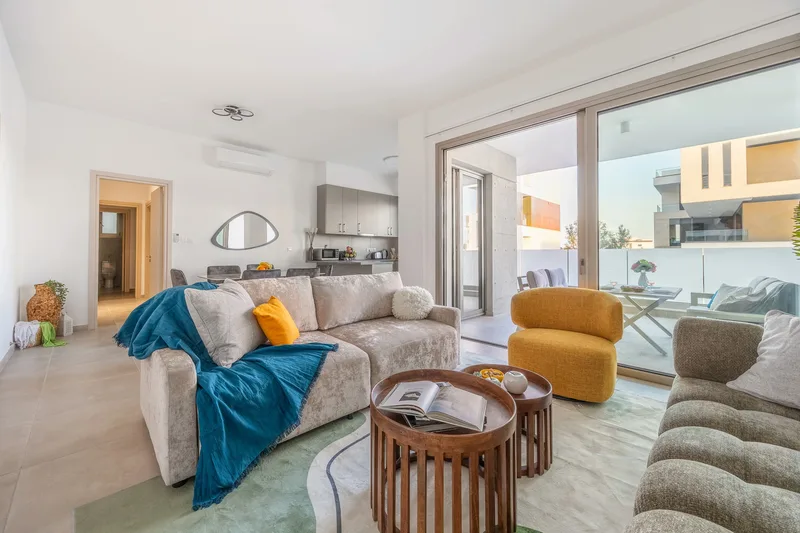
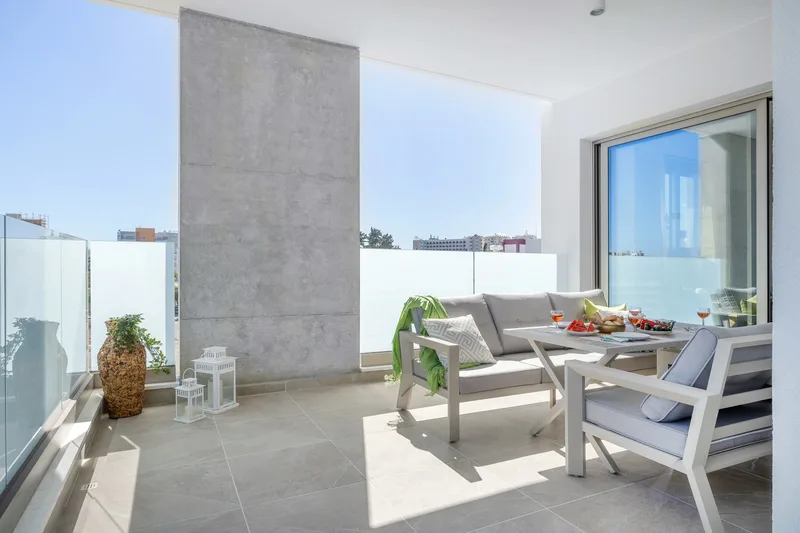
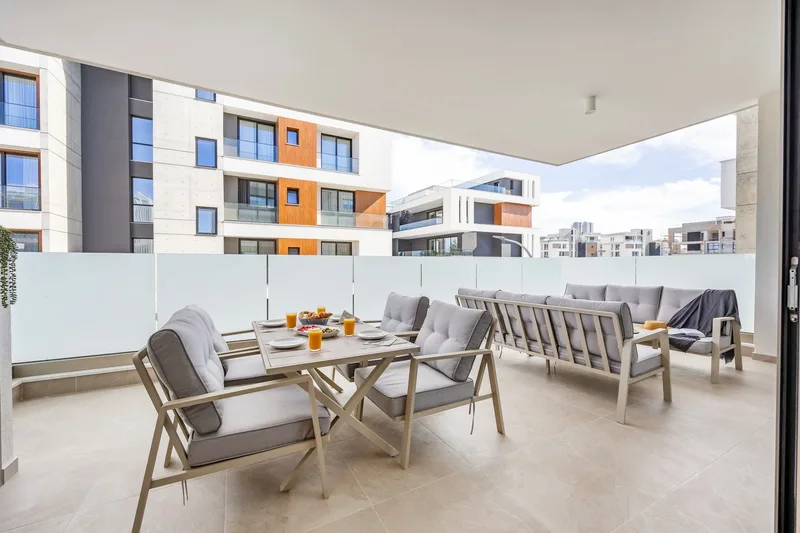
Limassol is the most logical base. Forty-five minutes to Omodos, a full city and beach infrastructure when you return, and easy access to the eastern Troodos villages on another day. Our rental properties in Limassol give you a private pool and a proper kitchen to come home to after a day of tasting your way through the mountains.
Paphos works equally well if your trip leans west. You can loop through different villages on the return, and Paphos also gives you access to the Akamas Peninsula, the Tombs of the Kings, and a completely different coastal character from Limassol.
For something in between, Aphrodite Hills offers a premium base that combines resort amenities with genuine proximity to the wine villages. From Aphrodite Hills, the Omodos drive takes roughly 35 minutes. Pair a morning wine tasting in the mountains with an afternoon round of golf and you’ve built a day that most holiday destinations simply can’t match.
Whatever your base, our luxury villas across Cyprus are designed for exactly this kind of trip: a comfortable, private home to return to after days spent exploring villages, vineyards, and mountain trails you didn’t know existed.
Omodos doesn’t try to impress you. It has no marketing budget and no PR strategy. It just keeps doing what it’s done for five thousand years: growing grapes, pressing wine, and welcoming anyone who makes the drive up. That’s enough.